
Rates & Market
Mortgage Rates Top 7%: What It Means for Portland Buyers and Sellers
By Tim Penner · Penner Group Properties · September 25, 2026
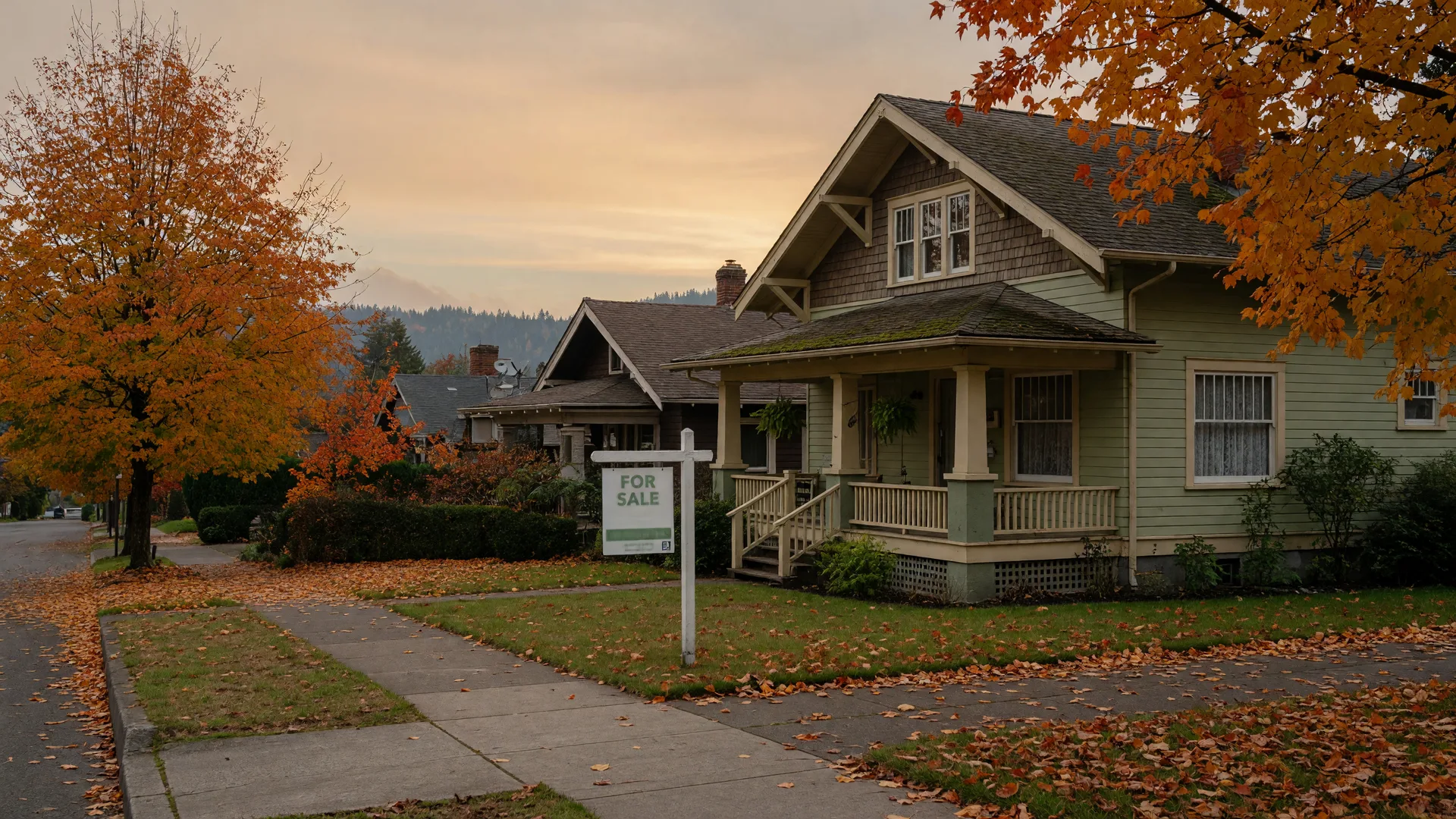
The First Week Above 7% Since Early 2025 · Greater Portland, Oregon
Updated October 13, 2026
Rates have climbed further since the update below. Freddie Mac's Primary Mortgage Market Survey put the average 30-year fixed mortgage at 7.40% for the week of October 8, 2026, up from 7.28%, the highest since November 16, 2023, after seven straight weekly increases. On the $432,000 loan this note uses, the payment is now roughly $110 a month higher than the number below and about $315 more than a year ago. Markets now expect the Fed to hold at its October 27-28 meeting, pricing roughly an 80% probability of no change. See our new note on rates at 7.40%, published October 13, 2026, for the full picture.
Updated October 6, 2026
Rates have moved higher since this note first ran. Freddie Mac's latest survey put the average 30-year fixed mortgage at 7.28% for the week of October 1, 2026, up from 7.03%, the highest since November 2023, as the 10-year Treasury traded at its highest level since 2002. On the $432,000 loan this note uses, the payment is now roughly $75 a month higher than the number below and about $270 more than a year ago. The Mortgage Bankers Association's contract rate sits at 7.30%, also the highest since November 2023. What this note argues holds and matters more: the payment math, not the headline, is what decides. See our new note on rates at 7.28%, published October 6, 2026, for the full picture.
The Short Version
Freddie Mac's weekly survey put the average 30-year fixed mortgage at 7.03% for the week of September 24, 2026, up from 6.95% the week before and the first time the rate has been above 7% since January 2025. On a median-priced Portland metro home, that adds roughly $90 a month to the payment compared with early September, and about $200 a month compared with a year ago. Higher rates are cooling demand, not collapsing it: the metro's August report still showed a balanced market with a median price of $540,000, 3.8 months of supply, and homes selling in about 57 days on average. This note walks through why rates jumped, what it does to the monthly math, and how buyers and sellers across our service areas can respond.
7.03%
Average 30-year fixed mortgage, week of September 24, 2026
Freddie Mac PMMS, up from 6.95%; the first week above 7% since January 2025
6.42%
Average 15-year fixed mortgage, same week
Up from 6.26% the week before
~5.1%
10-year Treasury yield that week
Its highest level since 2007; the benchmark mortgage rates track
~$90 to $200
Extra monthly payment on a $432,000 30-year fixed loan
Compared with early September and with a year ago; illustrative math, not a quote
Rate, yield, and payment indicators as of the week of September 24, 2026. The monthly-payment figure is illustrative math on a 30-year fixed loan, not a quote. Sources are listed at the bottom of this page.
Why Rates Just Jumped
Mortgage rates do not follow the Federal Reserve directly; 30-year fixed loans track long-term bond yields, and those yields moved sharply this month. The benchmark 10-year Treasury traded at its highest level since 2007, above 5.1%, the same week the rate survey crossed 7%. That move came from a mix of pressures: higher energy prices feeding inflation expectations, stronger-than-expected September business-activity reports, and Federal Reserve messaging that more rate hikes are likely to be needed. Meanwhile the Fed's September 16 decision, its first hike since 2023, took its target range to 3.75% to 4.00%, and it signaled at least one more increase is possible before year-end.
The practical point for homebuyers is the same one we have made all year: the Fed sets the short-term rate, markets set your mortgage, and the two do not move in lockstep. What matters for your purchase is your own rate quote, your own payment math, and what is actually for sale in the community you want. Our earlier note on the Fed's September hike covers that in more depth, and the September metro market update shows what a balanced market looks like in the numbers.
What It Means for Buyers
The honest math: on a $540,000 home with 20% down, the loan is $432,000. At 7.03%, principal and interest run about $2,880 a month. At 6.71%, the early-September average, it was about $2,790, and a year ago at 6.30% it was about $2,675. Taxes, insurance, and any HOA dues sit on top. The gap is meaningful, roughly $90 a month since early September and about $200 a month since last autumn, but it rarely decides alone whether a purchase works.
- Run the payment, not the headline. On a median-priced $540,000 home with 20% down, the loan is about $432,000. At 7.03% the principal and interest payment lands near $2,880 a month; at the early-September average near 6.71% it was about $2,790, and a year ago, at 6.30%, about $2,675. That is real money, roughly $90 a month since early September and about $200 a month since a year ago, but it rarely decides alone whether a purchase works. What decides is the full monthly number against your income, your other debts, and your plan for the next few years.
- Lock when the number works, not when the news feels right. No one can promise lower rates, and waiting through a rising week has not rewarded buyers in 2026. If the payment at a quoted rate fits your budget, a rate lock removes the uncertainty while you shop and negotiate.
- Ask about the tools. Temporary rate buydowns, seller-paid concessions toward your closing costs or points, and adjustable-rate products with longer fixed terms all exist for a reason, and in a balanced market sellers often contribute. The Oregon Bond program and OHCS down payment assistance can also offset a higher-rate world, since they lower the price you pay for the money you borrow.
- A higher rate can be a negotiating lever. Sellers know their buyer pool is rate-sensitive right now. Price is not the only thing that moves in a conversation; so do seller contributions, a quicker close, and repairs. Use the rate environment as a reason to talk, not a reason to walk away from a home that fits.
If a lower cash hurdle helps, our note on Oregon down payment assistance walks through up to $60,000 of state help, and the home buyer's guide covers the full process from pre-approval to keys.
What It Means for Sellers
- Price against the financing your buyers actually face. At 7.03%, a buyer who qualified at 6.4% last year now carries a noticeably higher payment on the same loan. Homes priced against current, closed comparables still draw showings in the first two weeks; homes priced a year ago sit.
- Seller concessions are back on the table. Contributing to a temporary buydown or paying a share of closing costs can turn a rate-shocked buyer into a contract, often for less than a price cut and with more value per dollar.
- Days on market still matter. The August report showed the metro averaging roughly 57 days on market, so a listing that lingers gets read as stale. A sharp first-week pricing strategy keeps you ahead of that cycle.
- Intentionality wins in a rate-sensitive market. A clean, well-presented home with clear terms and a responsive negotiation process attracts the buyers who are out there, and they are out there; homes are still selling, just on more realistic timelines.
For a fuller picture of how a two-broker team markets a home in exactly this kind of market, our note on selling with a boutique team covers presentation, pricing, and the quiet paperwork that protects you.
What This Looks Like in Our Service Areas
A 7% rate lands differently at different price points, which is why local knowledge matters more, not less, in a rate-sensitive market.
Beaverton, Sherwood, Wilsonville
Higher-priced corners of Washington County and the I-5 corridor carry larger loans, so the same rate shifts the payment more and rate locks matter. Condos and townhomes, like our current Sherwood listing at Woodhaven Crossing, keep an entry point that full-size houses no longer offer in these towns.
Hillsboro, Cornelius, Forest Grove
The technology corridor keeps both incomes and buyer demand steady, and new construction in west Washington County frequently comes with lender incentives or builder buydowns that directly answer the rate environment. Asking what incentives are attached to a new home is standard practice right now.
Newberg and Woodburn
Down the valley, lower medians mean the same rate produces a smaller monthly swing, which is part of why Woodburn keeps drawing first-time and move-up buyers. Yamhill and Marion County markets run on their own economics, and watching closed sales near a target home beats reading metro averages.
The full map of our service areas shows the range we cover, and our current listings show what is actually on the market right now, priced for this rate environment.
How to Use This Fall
- Get your numbers fresh, not borrowed. Rates and lender programs change weekly; have a lender run your exact scenario with today's pricing, including points, so you are deciding on your payment, not a headline.
- Expect the market to behave like a market. More inventory and fewer competing offers mean inspections, financing contingencies, and negotiation are back. Use the time you have, but stay ready to act when the right home lists.
- For sellers, price for now. A first-week pricing strategy against current comparables is the single most reliable way to sell on your timeline, and seller concessions can do more work than a price cut.
- Remember the longer view. Rates above 7% are striking against the last two years, but they are not an impossible market, and the buying versus renting comparison shows why ownership still builds wealth for most households over five to ten years, even at today's rates.
Sources
The figures in this note come from these public sources, retrieved September 25, 2026:
- Freddie Mac: Mortgage Rates Average 7.03% (September 24, 2026)
Freddie Mac's Primary Mortgage Market Survey for the week of September 24, 2026: 30-year fixed at 7.03%, up from 6.95% the week before; 15-year fixed at 6.42%, up from 6.26%. Retrieved September 25, 2026.
- Freddie Mac Primary Mortgage Market Survey
Weekly national average mortgage rates, retrieved September 25, 2026.
- US News: Mortgage Rates Climb for 5th Straight Week, Pushing Average Above 7%
Coverage of the September 24, 2026 Freddie Mac survey and the five-week run-up in rates. Retrieved September 25, 2026.
- CNN: 10-Year Treasury Yield Hits 5.1% for First Time in 19 Years
Coverage of the September 23, 2026 move in long-term bond yields, the benchmark mortgage rates follow. Retrieved September 25, 2026.
- CNBC: What's Driving the Treasury Yield Spike
Why long-term yields moved that week: energy prices, strong business-activity reports, and Federal Reserve messaging. Retrieved September 25, 2026.
- CNBC: Fed Approves Interest Rate Hike, Signals One More to Come
The FOMC raised its target range to 3.75%-4.00% on September 16, 2026, its first hike since 2023, and signaled more may follow this year. Retrieved September 25, 2026.
- September 2026 Market Action Report, Portland Metro
RMLS-based August 2026 figures for the Portland metro: median sale price $540,000, down 1.8% year over year; 3.8 months of supply; roughly 57 days average market time. Retrieved September 25, 2026.
Ready to see your exact numbers?
Rates moved this week, but your payment is a calculation, not a headline. Tell us the home you are eyeing and your down payment, and we will run today's payment math for your situation, then connect you with a lender we know and trust. Call (971) 777-3137, write to Concierge@pennergroupproperties.com, or send a note through the contact page.
Talk to the Team