

A Look Into the Markets - April 17, 2026
Bonds Make a MOVE
Volatility in the bond market is beginning to ease, and that’s making a difference for interest rates. The MOVE Index, often referred to as the bond market’s “fear gauge,” has been trending lower, signaling a calmer trading environment. As volatility declines, bond prices tend to move higher, which helps push long-term rates like mortgages lower.
A quieter market also helps address one of the biggest challenges for housing: the spread between the 30-year mortgage rate and the 10-year Treasury. Historically, that spread averages around 170 basis points, but it has recently hovered closer to 200 basis points. If volatility continues to subside, we could see that spread narrow back toward normal levels, even without further improvement in the 10-year yield. Much of this recent stability can be attributed to a calmer tone surrounding the Iran conflict.
Oil Slips Lower
Oil prices have also backed off recent highs, with WTI crude now well below the $114 per barrel levels seen just a couple of weeks ago. However, ongoing chatter about a potential two-week extension in the Iran conflict is keeping uncertainty in play. That may limit how much further oil, and in turn, interest rates can decline.
Producer Prices Lower Than Expected
Inflation data offered some relief this week, with the Producer Price Index (PPI) coming in lower than expected. As a leading indicator of inflation, softer producer prices can help keep consumer inflation in check. That’s welcome news for bonds and could support future Fed rate cuts if the trend continues.
4.20 Percent
The 10-year Treasury yield has moved lower after reaching 4.48 percent on March 27 and is now testing a key level near 4.20 percent. A break below this level could open the door for further improvement in rates.
| 30-year mortgage rates | 17-Apr-26 | |
| 6.30% | ||
| -.07% WoW (6.37%) | -.53% YoY (6.83%) | |
| 10-year Treasury note yields | 17-Apr-26 | |
| 4.28% | ||
| -.01% WoW (4.29%) | +.01% YoY (4.27%) | |
Rate information shared here reflects the national average and isn't a guarantee of rates available.
Looking Ahead
Next week will be a relatively quiet one, and quite literally. The Federal Reserve enters its blackout period, meaning Fed officials will not be speaking on monetary policy. With no Fed commentary to guide markets, attention will shift to incoming data.
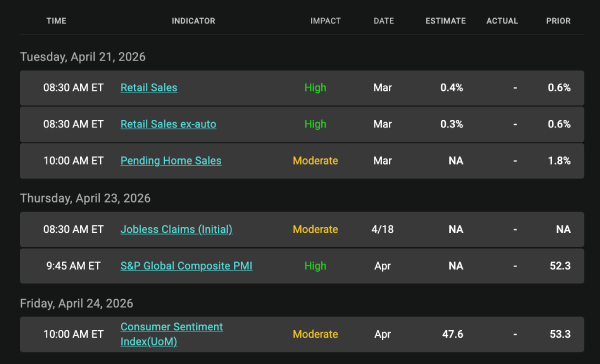
On the calendar, we’ll get Retail Sales, Pending Home Sales, Jobless Claims, and Consumer Sentiment. While these reports can move markets, there are no Treasury auctions scheduled, removing a recent source of upward pressure on yields.
In short, with less Fed noise and fewer market-moving events, the current trend of lower volatility could continue, keeping the focus on whether rates can build on their recent improvement.
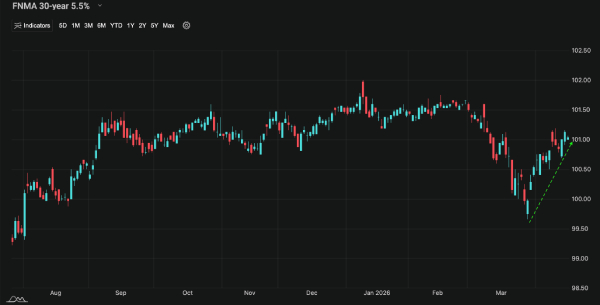
Mortgage Market Guide Candlestick Chart
Each candle represents one day of trading. As mortgage bonds prices move higher, rates move lower. You can see on the right side of the chart, how mortgage bond prices have improved nicely since bottoming on March 27th.
Chart: Fannie Mae 30-year 5.0 percent coupon (Friday, April 17, 2026)
Economic calendar for the week of April 20-24
| Mark Snow |
| Senior Loan Officer | NMLS #259960 |
| 397 SW Upper Terrace Dr. Suite 150, Bend OR 97702 |
| O: (503) 929-5887 | M: (503) 462-3101 |
| msnow@guildmortgage.net |
| Visit My Webpage | Download mobile app |
Recent Posts