
Market Update
Election Day 2026: What the Vote Means for Portland Housing
By Tim Penner · Penner Group Properties · November 3, 2026
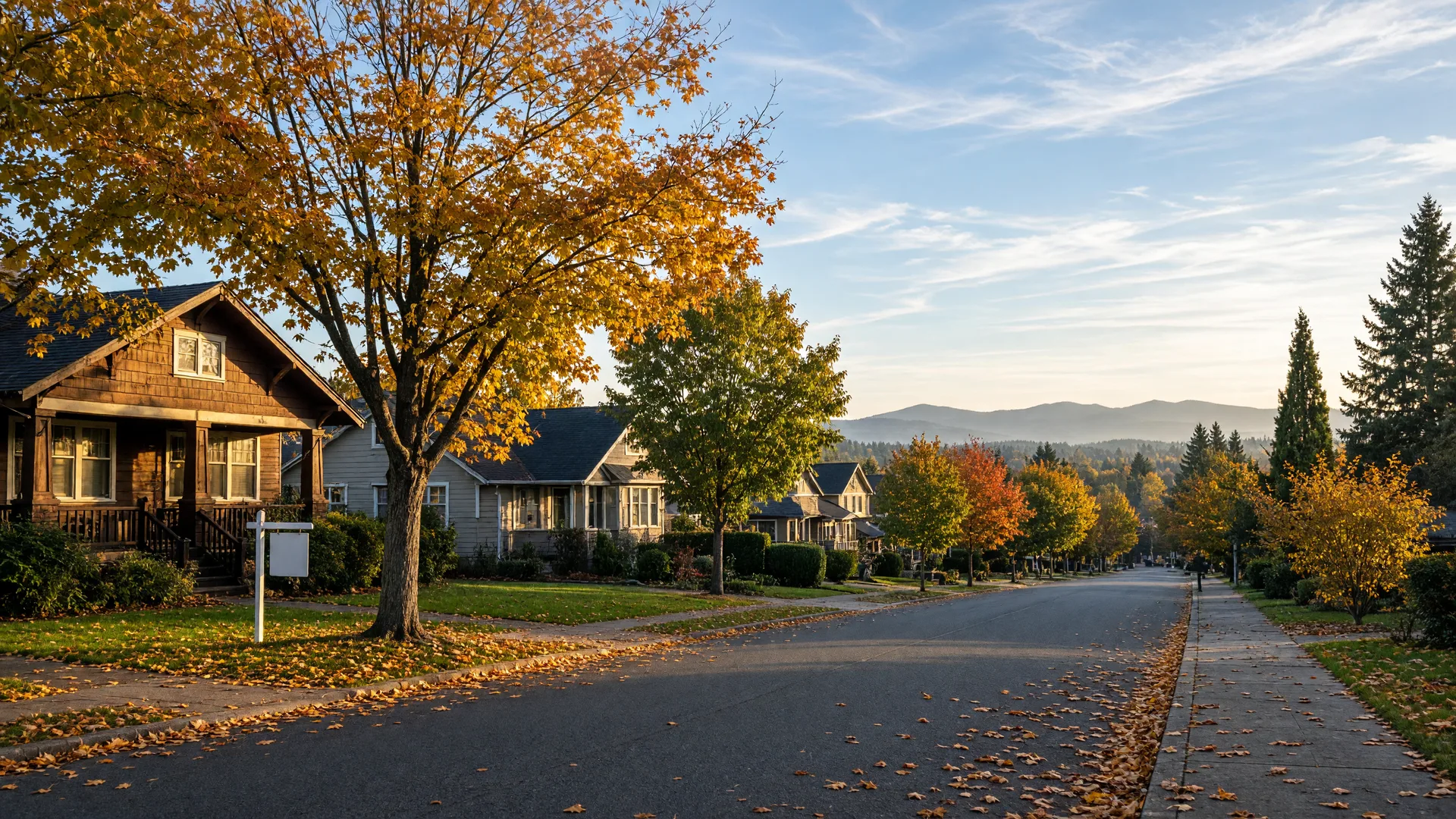
A Quiet Street on Election Day · Greater Portland, Oregon
The Short Version
Today, November 3, 2026, is Election Day: all 435 U.S. House seats, 35 of 100 Senate seats, and 36 governorships are on the ballot, with control of Congress in play and voters ranking inflation and affordability, including housing costs, among their top issues. In Oregon, the November ballot carries no statewide measures, so no housing, rent, or tax question is on the state ballot this cycle; the only statewide measure of 2026, the transportation veto referendum known as Measure 120, failed on the May primary ballot. Portland voters do see Measure 26-267, a participatory-budgeting proposal, and several school-bond measures sit on county ballots, but this cycle's housing policy is being set by candidate races, not ballot measures. Historically, elections change the housing market far less than the calendar does: home sales rose the year after 9 of the last 11 presidential elections, and price appreciation has averaged about the same in election and non-election years. With the average 30-year mortgage at 7.24% for the week of October 29, the 10-year Treasury near 4.9%, the Fed's December 8-9 meeting still priced for a possible hike, and the Portland metro sitting on a $545,000 September median with 4.2 months of supply and 68 days of average market time, the advice from the economists we follow is the same: the fundamentals matter more than who wins. Vote today, then make your real estate decision on the calendar and the numbers, not on the news cycle.
Nov 3
Election Day 2026: all 435 House seats, 35 of 100 Senate seats, and 36 governorships on the ballot
Control of Congress in play; voters rank inflation and affordability among their top issues
None
Oregon statewide ballot measures this November
No housing, rent, or tax measure on the state ballot; Measure 120 failed in May
7.24%
Average 30-year fixed mortgage, week of October 29, 2026
Freddie Mac PMMS, a second straight weekly decline; next reading November 5
$545,000
Portland metro median sale price, September 2026
Flat year over year; 4.2 months of supply and 68 days on market, the latest full RMLS report
The election facts are from the official voter guides and coverage cited at the bottom of this page; the rate is the Freddie Mac Primary Mortgage Market Survey reading for the week of October 29, 2026; the market figures are RMLS-based September 2026 Portland metro data.
What Elections Do (and Don't) Do to Housing
Every election cycle, clients ask whether they should wait to buy or sell until the results are in. The honest answer, from the people who study this for a living, is that the election itself is the least important variable in your decision. Here is what the data actually shows:
- Home sales move on the calendar, not the count. According to NAR, home sales increased in the year following 9 of the last 11 presidential elections, going back to 1978. Election years do tend to run slightly slower late in the year, as some buyers pause and some sellers wait, but the effect is a scheduling lull, not a market signal, and it typically reverses within a quarter once the votes are counted.
- Prices barely notice the election. A Bankrate analysis of the Case-Shiller index found home price appreciation in election years since 1987 averaged about 4.8%, actually a touch above the 4.4% of other years. Midterm history is more mixed, strong after 1978, 2002, 2018, and 2022, weak after 2006 and 2010, but the soft years line up with recessions and credit events, not with who won.
- Mortgage rates have no consistent election pattern. Freddie Mac's data shows 30-year rates fell from July into November in 8 of the last 11 presidential election years, and The Real Deal's review of midterm years since 1982 found home sales fell more often than they rose, with no rate pattern that favored either party. What actually moves rates is inflation, Treasury supply, and the Fed, not the ballot box.
- The economists' consensus is blunt. Bright MLS chief economist Lisa Sturtevant: 'Historically, the housing market doesn't tend to look very different in presidential election years compared to other years. It's really about demographics and the economy.' NAR chief economist Lawrence Yun describes election cycles as bringing 'more uncertainty than concrete market' effects. Inventory, rates, and affordability decide your transaction; the count decides almost nothing about your street.
The takeaway for anyone planning a move: an election is a single day with a predictable afterglow, not a turning point for your street. The market you are buying into is the one set by inventory, rates, and the local economy, all of which we can measure today.
What's Actually on the Oregon Ballot
Before you assume the vote will reshape local housing, it helps to know what is actually on the ballot here. The short version: very little that touches real estate directly.
- No statewide measures this November. Oregon's November 3 ballot carries no statewide ballot measures at all, and none of 2026's statewide questions touched housing, rent, or property taxes. The only statewide measure of the year, Measure 120, was the veto referendum on the legislature's transportation package, a gas-tax, vehicle-fee, and transit-payroll-tax plan, and voters rejected it on the May 19 primary ballot with roughly 83% opposed.
- Portland's only city measure is about budgets, not buildings. Measure 26-267, the 'Community Budgeting for All' initiative, would create a participatory-budgeting program in which residents make binding decisions on at least 2% of the city's annual General Fund discretionary spending. Whatever you think of it, it is a budgeting process, not a housing, rent, or zoning change.
- The county ballots carry school bonds, not housing bonds. Clackamas County voters see the North Clackamas School District bond, about $245 million, plus Gladstone and Silver Falls bond measures, and Washington County's notable item is a Hillsboro School District 1J bond. There is no Metro regional housing measure on this ballot.
- Housing policy this cycle gets set by races, not measures. It is worth saying plainly: the places that write Portland-area housing rules, the Portland City Council seats in Districts 3 and 4 that shape rent and relocation-assistance policies, and the county commissions that approve land use and housing programs, are decided by the candidates who win tonight. If local housing policy matters to you, the races are where it happens.
If you are wondering what a change in control would mean for real estate, the honest answer is: not much that is immediate. National housing policy moves through budgets and agency rules over months, and Oregon's housing landscape is set in Salem and in county and city halls, most of which are not on this ballot anyway.
What the Market Watches After the Polls Close
If the results themselves barely move the market, what actually matters in the days after? Four things, none of them sorted out overnight:
- The 10-year Treasury, not the winner. Mortgage rates are priced off the 10-year Treasury yield, which markets set every trading day on inflation, growth, and Treasury supply. The 10-year closed near 4.91% on November 2, down from the 5.31% early-October peak, and the average 30-year fixed mortgage followed it down to 7.24% for the week of October 29, a second straight weekly decline. How the bond market reads the election's fiscal implications will show up in that yield within days, a better signal than any forecast.
- December 9 at the Fed. Markets now price roughly a 73% chance of a quarter-point hike at the Fed's December 8-9 meeting, the last scheduled decision of 2026, up from about 42% a month ago. The Fed held on October 28, with two governors dissenting in favor of an immediate hike, so nothing an election does changes the calendar that matters most to your rate.
- The tax and budget calendar. The next Congress will decide the fate of expiring provisions from the 2017 Tax Cuts and Jobs Act and the 2025 One Big Beautiful Bill Act, full-year government funding, permitting reform, and the farm bill. Housing wades in through the details, from deductions and investor rules to funding for housing programs, but those bills take months to negotiate, and nothing about your tax bill changes the morning after the vote.
- Affordability is already the issue. Voters across the country rank inflation and affordability, energy, health care, and housing costs among their top concerns this cycle, and both parties campaigned on housing. That focus is bipartisan and has been building for years, so expect housing policy to stay near the top of the national conversation well into 2027, a slow-moving variable, not a reason to change your plans this week.
Our note on the Fed holding rates, published October 29, walks through the vote and the December calendar, and our note on rates easing to 7.24% explains why the 10-year Treasury, not Washington, sets your mortgage rate. The next weekly rate reading is due Thursday, November 5.
Where the Portland Market Stands Today
While the votes are counted, the local market keeps doing what it has done all fall: staying balanced, patient, and a step friendlier to buyers than a year ago. The September report remains the latest full picture, with the October report due before Thanksgiving:
- Prices are flat, not falling. The September RMLS-based metro median was $545,000, flat year over year and up about 0.9% from August. That is a market holding value while buyers gain leverage, which is the pattern to expect through the winter. Our note on the market shifting to buyers walks through the September report in full.
- Inventory keeps easing toward balance. About 4.2 months of supply in September, the highest of the year, with active listings above last year's level before the seasonal slide into December. Buyers have more choices and more time than at any point since the pandemic years, and terms like inspection and financing contingencies are back in many contracts.
- Homes take longer, and pricing shows it. Average market time ran about 68 days in September, up from 57 in August, and roughly 47% of active metro listings carried a price reduction as of mid-September per the RMLS Market Trends snapshot, with one tracker putting the October share near 53%. In this market, the first two weeks decide a listing's fate.
- The October report is the next milestone. RMLS typically releases its Market Action Report around the 18th to 20th of the month, so the first full read on October activity lands before Thanksgiving. Until then, September is the freshest official picture, and our October market update keeps the running scoreboard.
For the town-by-town payment picture at the current rate environment, our payment-by-community note breaks the math down across all eight of our service areas.
What That Looks Like Across Our Service Areas
The metro median is a useful starting place, but the value of a local team is the local picture. Here is how the current, rate-driven market plays out around the communities we serve:
Beaverton & Sherwood
Washington County stays our most active territory, with typical prices near $530K in Beaverton and about $631K in Sherwood, and the strongest demand close to the MAX lines, the Tigard and Sherwood corridors, and well-regarded school districts. Condos and townhomes keep an entry point that full-size houses no longer offer, which matters more with rates still near 7.25%. See what homes cost in Beaverton and our Sherwood spotlight.
Hillsboro, Cornelius & Forest Grove
The technology corridor keeps household incomes and demand steady, and new construction in west Washington County frequently comes with lender incentives or builder buydowns that answer the rate environment directly, so asking what incentives are attached is standard practice right now. Our Hillsboro, Cornelius, and Forest Grove guides cover the local picture.
Newberg
Wine-country living keeps Newberg a steady blend of commuters and locals, with mid-$500K medians that keep the rate math workable at current levels. The market is smaller and slower paced than the metro core, which suits sellers who price realistically and buyers who want room to compare. See our Newberg guide.
Wilsonville & Woodburn
Down I-5, the two ends of the payment spectrum: Wilsonville's typical home near $648K produces the largest monthly number in our service area, while Woodburn near $425K produces the smallest, which is why Woodburn keeps drawing first-time and move-up buyers even with rates above 7%. See living in Wilsonville and living in Woodburn.
Every one of these communities has its own rhythm, and the full map of our service areas shows the range we cover, from the metro core to the Willamette Valley. Our current listings show what is actually on the market right now, priced for this rate environment.
How to Use Election Week
Decision weeks make people pause, and election week is the champion pauser. For most buyers and sellers in our area, the productive move is the opposite:
Buyers: the vote does not change your payment.
Run the numbers at the rate in front of you, not the rate you hope for. On the $545,000 September metro median with 20% down, the loan is about $436,000, and at 7.24% principal and interest run near $2,970 a month before taxes, insurance, and any HOA dues, roughly $310 more than a year ago. A pre-approval that pins today's rate for a set window lets you act the day a well-priced home lists, and with a December hike priced at the Fed's December 8-9 meeting, locking when the payment works is the conservative play. If the cash hurdle is part of your math, state help covers up to $60,000 of down payment assistance.
Sellers: price against the buyer you can see today.
Your buyer is carrying a payment on a 7.24% loan, so price against current, closed comparables, not last year's, and treat a well-priced first two weeks as your strongest sales tool. Concessions, a contribution to a temporary buydown or closing costs, close more deals than price cuts in this market. Our seller's guide to 10 decisions before listing walks through the prep, and the winter outlook explains why November still holds a serious, fast-moving pool.
Everyone: vote today, then plan on the calendar, not the cable.
After you vote, the dates that matter to your move are the ones we can name today: the next Freddie Mac reading on November 5, the RMLS October report around November 18-20, and the Fed's December 8-9 decision. Each updates a number you can act on, which is more than an election result can say for your street. Our winter market outlook maps the season ahead.
Sources
The figures in this note come from these public reports and coverage, retrieved November 3, 2026. Monthly payment figures are the team's own estimates from the prices and rates cited, and are not quotes.
- Britannica: 2026 U.S. Midterm Elections
What is on the line November 3, 2026: all 435 House seats, 35 of 100 Senate seats, and 36 governorships, with Republicans holding the House and Senate heading in. Retrieved November 3, 2026.
- The Independent: The 2026 midterms, explained
Details on the balance of power (House 218-214 with one independent and two vacancies; Senate 53-47) and what a shift would mean for reconciliation bills and expiring tax provisions. Retrieved November 3, 2026.
- Brookings: The midterm effect, what the 2026 election could mean for public policy
Policy stakes of the 2026 midterms: tax provisions from the 2017 Tax Cuts and Jobs Act and the 2025 One Big Beautiful Bill Act, government funding, permitting reform, and the farm bill. Retrieved November 3, 2026.
- NAR (via The Motley Fool): Do Elections Affect the Housing Market?
Home sales rose the year after 9 of the last 11 presidential elections since 1978; economists Lisa Sturtevant of Bright MLS and Lawrence Yun of NAR on why election effects are smaller than the uncertainty they create. Retrieved November 3, 2026.
- Bankrate: The Housing Market During Election Years
Case-Shiller analysis: price appreciation averaged about 4.8% in election years since 1987 versus 4.4% in other years. Retrieved November 3, 2026.
- The Real Deal: Housing Notes, busting the midterm mortgage rate conspiracy
Midterm history since 1982: home sales fell more often than they rose in midterm years, with no consistent mortgage rate pattern favoring either party. Retrieved November 3, 2026.
- The Griffin: Do Midterm Elections Affect Real Estate Decisions?
Why midterm election noise has little to do with individual real estate decisions; the fundamentals dominate. Retrieved November 3, 2026.
- Top Agent: What Happens to Real Estate and Stocks After Midterm Elections?
Post-midterm market pattern coverage, October 29, 2026. Retrieved November 3, 2026.
- Ballotpedia: Oregon 2026 Ballot Measures
Confirms no statewide measures on Oregon's November 3, 2026 ballot; Measure 120, the transportation veto referendum, was on the May 19, 2026 primary ballot and failed with about 83% opposed. Retrieved November 3, 2026.
- City of Portland Auditor: What's on the Portland Ballot, November 3, 2026
Portland's only city measure: Measure 26-267, Community Budgeting for All, creating a participatory-budgeting program for at least 2% of General Fund discretionary spending. Retrieved November 3, 2026.
- Clackamas County: November 3, 2026 General Election
County measures are school bonds: North Clackamas School District (about $245 million), Gladstone, and Silver Falls. Retrieved November 3, 2026.
- Multnomah County: Ballot measure filings, November 2026 General Election
No Multnomah County housing measure; the local measure for Portland voters is 26-267. Retrieved November 3, 2026.
- The McCreith Team: October 2026 Market Action Report, Portland metro
RMLS-based September 2026 figures: median sale price $545,000, flat year over year; 4.2 months of supply, the highest of the year; 68 days average market time; pending sales down 17.9% year over year. Retrieved November 3, 2026.
- Freddie Mac Primary Mortgage Market Survey
Weekly national average 30-year fixed mortgage rate: 7.24% for the week of October 29, 2026, down from 7.32% and a second consecutive decline; the next weekly reading is scheduled for November 5. Retrieved November 3, 2026.
- FRED: Market Yield on US Treasury Securities at 10-Year Constant Maturity
Daily 10-year Treasury yield: peaked about 5.31% on October 5, 2026, and traded near 4.91% on November 2, 2026. Retrieved November 3, 2026.
Election Day is one day. Your move is another.
We track pending and sold data across the Portland metro, Washington County, and the Willamette Valley all month long, and we will keep reading the numbers for you as the returns come in. Call (971) 777-3137, write to Concierge@pennergroupproperties.com, or send a note through the contact page, and we will walk through the rates, the numbers, and your plan, whether you are buying, selling, or just being curious at pennergroupproperties.com.
For market notes, new listings, and local events as they happen, follow the team on Facebook.
Talk to the Team