
Rates & Market
Fed Decision Week: What the October 28 Meeting Means for Portland Buyers and Sellers
By Tim Penner · Penner Group Properties · October 20, 2026
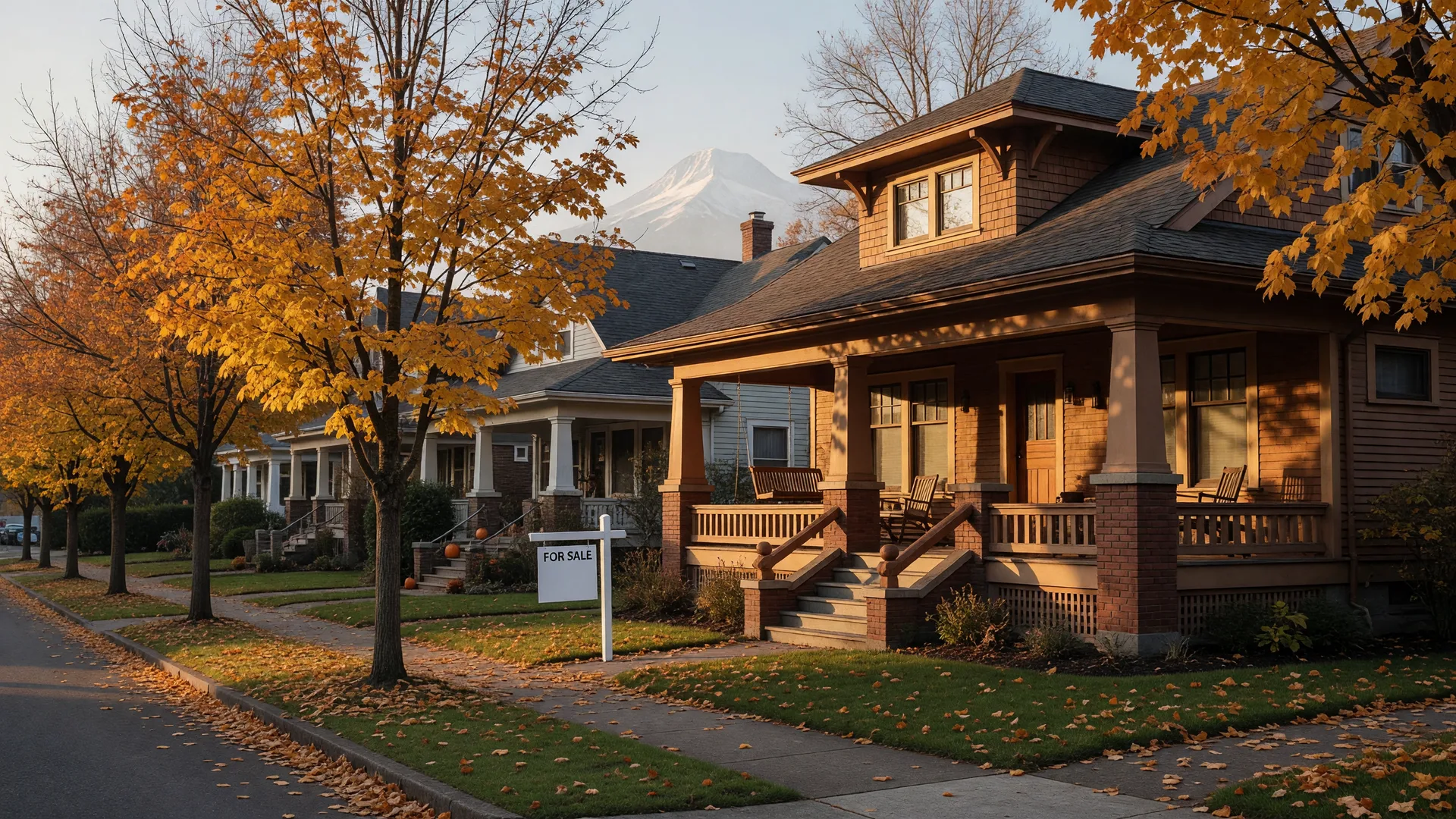
A Quiet Street Before a Big Decision Week · Greater Portland, Oregon
The Short Version
The Federal Reserve announces its latest rate decision on Wednesday, October 28, after a two-day meeting that starts October 27, and markets expect it to hold rates steady: fed funds futures price roughly an 80% chance of no change. That decision lands with the average 30-year fixed mortgage at 7.40% for the week of October 15, near a three-year high, and the benchmark 10-year Treasury above 5%. The bigger risk for borrowers is not the October meeting, where a hold is already priced in, but the December 8-9 meeting, which the Fed's own minutes suggest is the more likely venue for another hike. Through it all, the Portland metro market stays balanced: the September median came in at $545,000, flat year over year, with about 4.2 months of supply and homes selling in about 57 days. Here is how to read the week and what to do with it.
7.40%
Average 30-year fixed mortgage, week of October 15, 2026
Freddie Mac PMMS, unchanged week over week; up from 6.27% a year earlier
Oct 28
The FOMC's rate decision, announced 2:00 p.m. ET
Two-day meeting starts October 27; markets price roughly an 80% chance of a hold
~5.2%
10-year Treasury yield, mid-October
The benchmark mortgage rates track, near its highest in decades
$545,000
Portland metro median sale price, September 2026
Flat year over year; 4.2 months of supply, about 57 days on market
The rate is the Freddie Mac Primary Mortgage Market Survey reading for the week of October 15, 2026; the Fed decision date is from the Federal Reserve's FOMC calendar; the market figure is the RMLS-based September 2026 Portland metro median. See the sources at the bottom of this page.
What's Actually on the Table
Most attention this week will land on the single word the Fed does or does not say on Wednesday. Here is the honest read of the situation heading in:
- A hold is the market's base case. As of mid-October, fed funds futures priced roughly an 80% chance that the Federal Open Market Committee leaves its target range at 3.75% to 4.00% when it announces its decision on Wednesday, October 28. That range has been in place since the Fed's September 16 hike, its first since 2023.
- The minutes point the other way later. The September meeting minutes, released in early October, showed most officials still see another hike as appropriate before the end of the year, which is why markets treat the December 8-9 meeting as the more likely moment for the next move. A hold in October would not close the door on a December hike.
- A hot jobs report cooled the hike odds. A strong early-October jobs report briefly pushed expectations toward another move, but cooling inflation data and softer readings since have swung the odds back toward patience. Rate markets move on data, and the data between now and December will decide what actually happens.
- The announcement is only part of the story. Just as important as the decision itself is what the Fed says about the path ahead: the statement, the projections, and Chair Kevin Warsh's press conference. Markets will read all of it for how likely a December hike really is.
The takeaway for anyone watching the calendar: October 28 matters less as a decision than as a signal about December. If you are planning a purchase or a sale this fall, plan around the data between now and the December 8-9 meeting, not around next Wednesday's headline.
Why the Fed Matters to Your Mortgage (and Why It Isn't Everything)
It is easy to assume the Fed sets your mortgage rate. It does not, exactly. Understanding the actual chain helps you read the news without overreacting to it:
- Mortgage rates do not move in lockstep with the Fed. The fed funds rate sets the overnight cost of money between banks. A 30-year fixed mortgage is priced off the 10-year Treasury yield, which markets set every day based on inflation expectations, growth, and the Treasury's own supply and demand. That is why the two can drift apart for long stretches.
- A hold can still leave rates high. With the 10-year Treasury sitting near 5% in mid-October, near its highest level in decades, mortgage rates have room to stay elevated even if the Fed holds steady. The 7.40% average of the week of October 15 is up from 6.27% a year earlier, and other trackers read the same market between about 7.2% and 7.5%.
- Much of a hold is already priced in. Borrowers who wait for the Fed announcement to make their move may find rates barely budge, because markets have already priced the likeliest outcome. The bigger swings happen when the data, not the meeting, surprises.
- The long-term forecasts still point down. Fannie Mae projects the 30-year averaging about 6.80% by the end of 2026 and 6.70% by the end of 2027; Wells Fargo projects 6.90% and 6.75%. That is a gradual, modest drift, not a return to 4% rates, and it is a reason to buy when a payment works rather than waiting for a number that may take years to arrive.
On a median-priced Portland home near $545,000 bought with 20% down, the loan is about $436,000, and at the current 7.40% average, principal and interest run about $3,020 a month before property taxes, insurance, and any HOA dues. That is roughly $35 more a month than a year's worth of rate creep has added over the past year, which is real money but rarely the thing that tips a decision alone. What matters is the full monthly number against your budget, and our buying versus renting comparison walks through the costs buyers often forget. If a lower cash hurdle helps, our note on Oregon down payment assistance covers up to $60,000 of state help.
What the Latest Portland Numbers Show
The Fed is the backdrop, but your transaction happens in your neighborhood. The freshest full report, RMLS data for September 2026, shows a market that is balanced and patient, not frozen:
- Prices are flat, not falling. RMLS-based data for September 2026 put the Portland metro median sale price at $545,000, flat year over year and up about 0.9% from August, with an average sale price near $630,500. That is a market holding its value while buyers gain leverage, not one in retreat.
- Inventory keeps easing toward balance. Months of supply rose to about 4.2 in September, up from about 3.8 in August, with active listings above last year's levels. Buyers have more choices and more time than at any point in years, and terms like home inspections and financing contingencies are back in many contracts.
- Homes take longer, and pricing shows it. The metro averaged about 57 days on market in September, and Realtor.com found 31.6% of Portland listings carried a price reduction during the month, well above the 20.8% national average. In the city of Portland, Redfin's three-month median ran closer to $518,000, down about 2% year over year.
- Closed sales are running below last year. September closed sales came in at roughly 1,752 across the metro, down month over month, as higher rates keep some would-be buyers on the sidelines. Slower does not mean stopped: qualified, ready buyers still face real competition for well-priced homes.
This is the picture our October market update describes in more depth: prices roughly flat, inventory up, and the rate environment doing the heavy lifting. The 7.40% rate note published earlier this month covers the financing side of the same story.
What That Looks Like in Our Service Areas
A metro median is a useful starting place, but the value of a local team is the local picture. Here is how this rate-driven, balanced market tends to play out around the communities we serve (the pattern, not the exact numbers for a specific street, which you should always verify):
Beaverton & Sherwood
Washington County remains our most active territory, with the strongest demand close to the MAX lines, the Tigard and Sherwood corridors, and well-regarded school districts. Condos and townhomes keep an entry point that full-size houses no longer offer, which matters more at 7% rates.
Hillsboro, Cornelius & Forest Grove
The technology corridor keeps household incomes and demand steady, and new construction in west Washington County frequently comes with lender incentives or builder buydowns that directly answer the rate environment. Asking what incentives are attached is standard practice right now.
Newberg
Wine-country living keeps Newberg a steady blend of commuters and locals. The market is smaller and slower paced than the metro core, which works well for sellers who price realistically and buyers who want room to compare.
Wilsonville & Woodburn
Down I-5, Wilsonville shares the metro's balanced conditions with strong commuter appeal, while Woodburn and the broader Marion County market run on their own, generally more affordable economics. Lower medians mean the same rate produces a smaller monthly swing.
Every one of these communities has its own rhythm, and the full map of our service areas shows the range we cover, from the metro core to the Willamette Valley. Our current listings show what is actually on the market right now, priced for this rate environment.
How to Use This Week
Decision weeks make people pause. For most buyers and sellers in our area, the productive move is the opposite of pausing. Here is what we would do this week:
Buyers: get pre-approved now, not after the announcement.
A pre-approval locks in today's rate for a set window, which matters in a rising market, and it lets you move the moment the right home lists. Ask your lender about a rate lock, a temporary buydown, and seller-paid concessions; in a market where a third of listings carry price reductions, sellers routinely contribute. If a smaller down payment helps, state programs cover up to $60,000.
Sellers: price against the buyer you can actually see.
Your buyer is carrying a payment on a 7.4% loan, so price against current, closed comparables, not last year's, and treat a well-priced first week as your strongest sales tool. In a market with more inventory and 57 days on market, the home that shows at its best, clean, staged, photographed well, and marketed with intent is the one that sells on its timeline. Our note on selling with a boutique team explains why presentation wins in a balanced market.
Everyone: watch the 10-year, not just the Fed.
Mortgage rates follow the 10-year Treasury yield, so the number to watch this week is not only the FOMC announcement but where bond yields go in the weeks after. And keep the longer view: most forecasters expect the 30-year to drift gradually lower through 2027, which argues for buying when the payment works rather than waiting for a number that may take years to arrive.
If you would like a referral to a lender we trust, a run of the current rates for your situation, or a realistic look at what your home or your target neighborhood is doing right now, ask us. Pointing buyers and sellers to the right numbers is part of the job we do every week, in every one of the communities we serve.
Sources
The figures in this note come from these public reports, retrieved October 20, 2026:
- Freddie Mac Primary Mortgage Market Survey
Weekly national average mortgage rates: 30-year fixed at 7.40% for the week of October 15, 2026, unchanged week over week and up from 6.27% a year earlier; 15-year fixed at 6.71%. Retrieved October 20, 2026.
- Forbes Advisor: Mortgage Rates Today, October 19, 2026
Independent daily rate tracker reading the 30-year near 7.26%; other trackers in the same period ranged from about 7.2% to 7.5%. Retrieved October 20, 2026.
- CNBC: Fed officials see another hike coming, minutes show
The September FOMC minutes, released October 7, 2026, showed most officials see another hike as appropriate by year-end without signaling timing. Retrieved October 20, 2026.
- Forbes: What To Look For From The Fed's October Meeting
Overview of the October 27-28 meeting: markets price a hold, with the December meeting the more likely venue for any further hike. Retrieved October 20, 2026.
- CME FedWatch data via Growbeansprout
Fed funds futures pricing roughly an 80% probability of a hold at the October 27-28 meeting, with hike odds below 22% as of mid-October. Retrieved October 20, 2026.
- Federal Reserve FOMC calendar
FOMC meeting October 27-28, 2026, with the rate decision announced October 28 at 2:00 p.m. ET; the final scheduled 2026 meeting is December 8-9. Retrieved October 20, 2026.
- Cano Real Estate: Portland Metro Real Estate Market Report
RMLS-based September 2026 figures for the Portland metro: median sale price $545,000, flat year over year and up 0.9% from August; average sale price near $630,500; about 4.2 months of supply; roughly 57 days on market. Retrieved October 20, 2026.
- Realtor.com September Housing Report
31.6% of Portland metro listings carried a price reduction in September 2026, versus 20.8% nationally. Retrieved October 20, 2026.
- Redfin: 2026 Portland Housing Market
City of Portland three-month median sale price near $518,000, down about 2.2% year over year, with homes selling in about 25 days. Retrieved October 20, 2026.
- Forbes Advisor: Mortgage Rate Forecast 2026-2027
Fannie Mae projects the 30-year averaging about 6.80% by end-2026 and 6.70% by end-2027; Wells Fargo projects 6.90% and 6.75%. Retrieved October 20, 2026.
Not sure what this week means for your move?
We track pending and sold data across the Portland metro, Washington County, and the Willamette Valley all month long. Call (971) 777-3137, write to Concierge@pennergroupproperties.com, or send a note through the contact page, and we will walk through the rates, the numbers, and your plan, whether you are buying, selling, or just being curious at pennergroupproperties.com.
For market notes, new listings, and local events as they happen, follow the team on Facebook.
Talk to the Team