
Rates & Market
Mortgage Rates Ease to 7.32%: The First Drop in Seven Weeks
By Tim Penner · Penner Group Properties · October 23, 2026
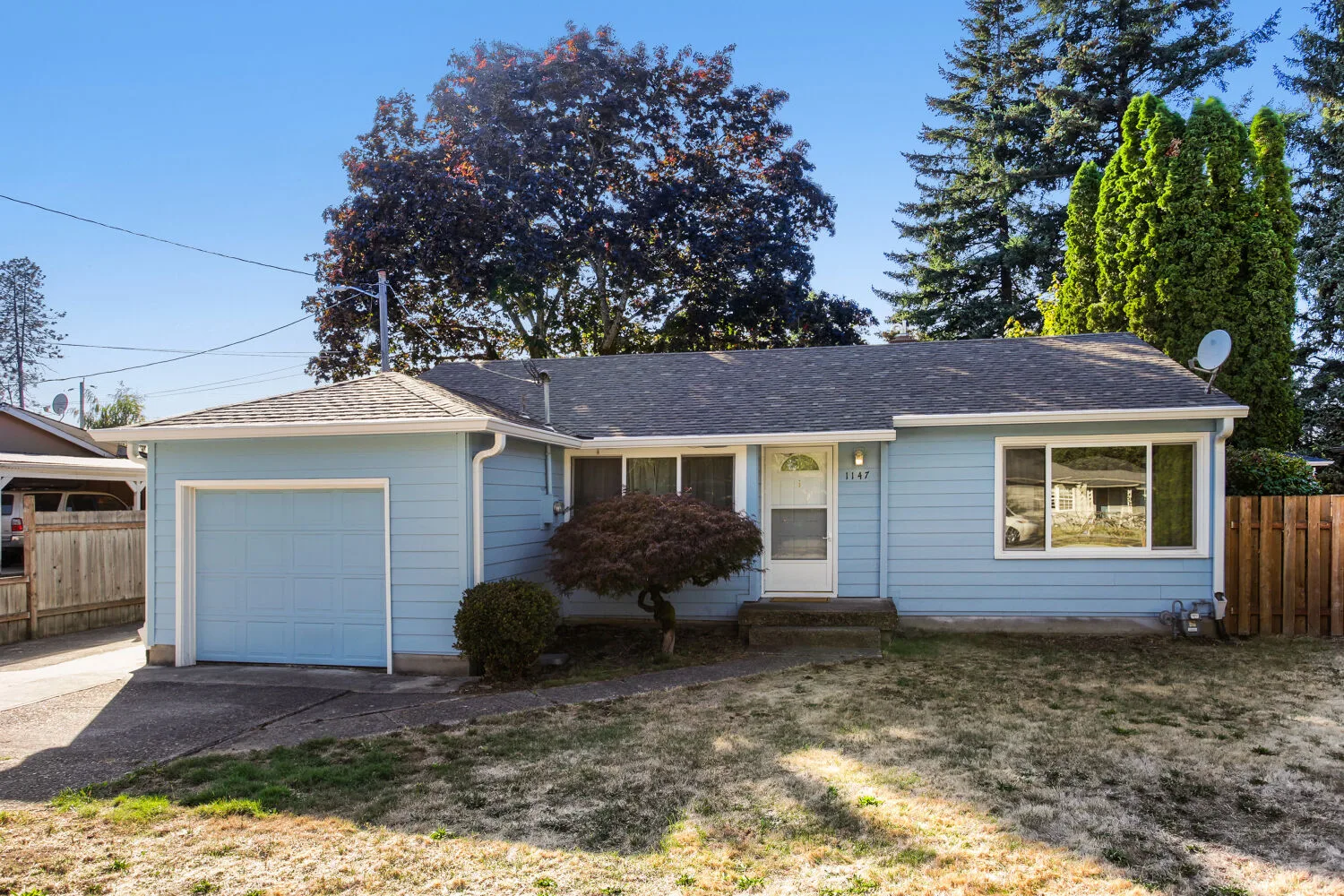
Rates Ease as Treasury Yields Fall · Greater Portland, Oregon
Revised October 30, 2026
Rates have eased another week since this note ran. Freddie Mac's survey put the average 30-year fixed mortgage at 7.24% for the week of October 29, down from 7.32% and a second consecutive weekly decline, the first back-to-back drop since late summer, as the 10-year Treasury eased toward 4.9%. The 7.32% reading for the week of October 22 still stands as written; the two-week move adds up to about 16 basis points of relief, still roughly $310 a month above a year ago. For the updated numbers, see our note on rates easing to 7.24%, published October 30, 2026.
Revised October 29, 2026
The Fed meeting this note looks ahead to is now behind us. On October 28, the Federal Open Market Committee held its target range at 3.75% to 4.00% by a 10-2 vote, as mid-October futures had priced, and the 7.32% rate reading for the week of October 22 still stands. The next milestone is the December 8-9 meeting, where markets now price roughly a 73% chance of a hike, up from about 42% a month ago. For the full outcome and what it means for Portland-area buyers and sellers, see our note on the Fed holding rates, published October 29, 2026.
Revised October 27, 2026
RMLS's full September report confirms the market has moved a step further toward buyers than the numbers below first suggested: average market time came in at 68 days, up from 57 in August, and about 46.9% of active listings carried a price reduction as of mid-September, an RMLS Market Trends measure (Realtor.com's separate count found 31.6% of listings with a price cut during the month). The 7.32% rate reading for the week of October 22 still stands. For the complete September picture and what it changes, see our note on the market shifting to buyers, published October 27, 2026.
The Short Version
The average 30-year fixed mortgage fell to 7.32% for the week of October 22, 2026, down from 7.40% the week before and the first weekly decline since late August, breaking a seven-week streak of increases. The 15-year fixed averaged 6.68%. The driver was the 10-year Treasury, which fell sharply as investors bought safe-haven government bonds during a stock-market selloff. On a median-priced Portland metro home, the move trims roughly $25 a month from principal and interest versus last week, a small number, but the direction is the news: the climb has paused just as the Federal Reserve meets October 27-28. Rates remain near a three-year high and roughly $325 a month above a year ago, so the practical advice barely changes: price against today's financing, use the tools that lower your payment, and act when the number works. This note walks through why rates finally eased, what it changes for buyers and sellers across our service areas, and what to expect into November.
7.32%
Average 30-year fixed mortgage, week of October 22, 2026
Freddie Mac PMMS, down from 7.40%; the first weekly decline since late August
6.68%
Average 15-year fixed mortgage, same week
Down from 6.71% the week before
~$25
Lower monthly principal and interest on a median-priced metro loan
Versus the prior week; illustrative math on a $432,000 loan, not a quote
~4.96%
10-year Treasury yield, October 22 close
Down about 17 basis points in a day as stocks sold off
National rate figures are the Freddie Mac Primary Mortgage Market Survey reading for the week of October 22, 2026; the payment comparison is illustrative math on a $432,000 loan (20% down on a $540,000 metro median), before taxes, insurance, and any HOA dues, and is not a quote. See the sources at the bottom of this page.
Why Rates Finally Eased
After seven straight weekly increases, the October 22 reading turned down. The change was small, but the mechanism is worth understanding because it tells you what to watch next:
- Mortgage rates follow the 10-year Treasury, not the Fed. A 30-year fixed loan is priced off the yield on long-term government bonds, and that yield fell sharply late this week as investors rushed into safe-haven U.S. Treasuries during a stock-market selloff. When bond prices rise, yields fall, and mortgage rates ease with them.
- It broke a seven-week climb. Rates had risen every week from mid-August through mid-October, from 6.95% the week of September 17 to 7.03%, 7.28%, and then 7.40% for two straight weeks. The October 22 reading is the first weekly decline since late August, a small step down after a long, grinding climb.
- The move was modest, and the level is still high. An 8-basis-point dip takes the average from 7.40% to 7.32%, still near the three-year high reached earlier this month and about 1.13 percentage points above the same week a year ago, when the 30-year averaged 6.19%. This is a pause in the climb, not a return to the low-rate years.
- Expectations matter as much as the data. Analysts pointed to a mix of drivers behind the pullback: the equity selloff, expectations that the Federal Reserve will hold rates at its meeting next week, and weak recent housing data. None of those guarantee lower rates, but together they are why financing costs finally ticked down.
What It Means for Buyers
A pause in the climb is welcome, but it is not a reprieve. Here is how a smart buyer should read the week:
- Run the payment, not the headline. On a median-priced $540,000 home with 20% down, the loan is about $432,000. At 7.32%, principal and interest land near $2,967 a month, roughly $25 less than at 7.40% and about $325 more than a year ago, when the same loan at 6.19% carried a payment near $2,643. The one-week change is small; the year-over-year number is the one that still shapes budgets.
- One week is not a trend, but it is a useful window. A single decline does not tell you where rates are going, and forecasters still expect them to stay elevated through year-end. The practical move is unchanged: if the payment at the rate you are quoted fits your budget, lock it while you tour and negotiate, rather than waiting for a headline that may not arrive.
- The tools still matter more than the rate. Temporary buydowns, seller-paid concessions toward closing costs or points, and Oregon's down payment programs all reduce the cash and monthly strain of a purchase, and they work regardless of whether rates hold at 7.32% or drift back up. Our <a href="/blog/oregon-down-payment-assistance-2026/" class="underline decoration-[#B6903F]/60 underline-offset-2 hover:text-[#6B1F2B]">note on Oregon down payment assistance</a> walks through up to $60,000 of state help.
- A balanced market still rewards a ready buyer. The metro's September data show a median sale price near $545,000, flat year over year, with more inventory and roughly a third of listings carrying price reductions. Buyers who are pre-approved and ready can move quickly when a well-priced home lists, and that has not changed with this week's rate reading.
If you would like a run of the current rates for your situation and a referral to a lender we trust, ask us. Pointing buyers to the right lender is part of the job we do every week, and we can also walk you through which concessions and assistance programs fit your purchase. Call (971) 777-3137 or send a note through the contact page.
What It Means for Sellers
For sellers, the small dip in rates changes less than the habits that already separate winning listings:
- Price against the financing your buyers actually face. A buyer who qualified at 6.19% a year ago now carries roughly $325 more a month on the same loan. Homes priced against current, closed comparables still draw showings in the first two weeks; homes priced a year ago sit, and the September data show they are getting price cuts.
- Seller concessions are a real tool, and buyers are asking. Contributing to a temporary buydown or paying a share of closing costs can turn a rate-shocked buyer into a contract, often for less than a price cut and with more value per dollar. A small easing in rates does not remove the need for that conversation.
- Days on market still matter. The full September RMLS report put average market time at 68 days, up from 57 in August, and a listing that lingers gets read as stale. A sharp first-week pricing strategy keeps you ahead of that cycle, whether rates are 7.32% or 7.40%.
- Presentation separates listings. In a market where buyers have choices, the home that shows at its best, clean, staged, photographed well, and marketed with intent is the one that sells on its timeline. Our <a href="/blog/selling-with-a-boutique-team/" class="underline decoration-[#B6903F]/60 underline-offset-2 hover:text-[#6B1F2B]">note on selling with a boutique team</a> explains why process and presentation win in a balanced market.
The Fed Meets Next Week
The bigger test comes in the days ahead, when the Federal Reserve announces its next rate decision:
- The Fed meets October 27-28, with the decision announced October 28. As of mid-October, fed funds futures priced roughly an 80% chance the Federal Open Market Committee holds its target range at 3.75% to 4.00%, the level it has held since the September 16 hike. Markets now expect patience, and the minutes of that September meeting suggest any next move is more likely to come in December than now.
- A hold would not unlock cheap mortgages. Even if the Fed holds, the 10-year Treasury remains well above its pre-war level near 3.97%, and mortgage rates price in inflation, growth, and bond demand, not just the fed funds rate. That is why borrowing costs can stay elevated while the Fed sits still.
- Forecasters expect rates to stay in the low-to-mid 7s. Fannie Mae raised its outlook sharply on October 14, now projecting the 30-year to average about 7.4% in the fourth quarter of 2026 and about 7.5% through 2027, and Goldman Sachs does not expect a drop toward 6.4% until late 2027. Plan around today's number, not a hoped-for one.
- The December 8-9 meeting is the next real milestone. The final scheduled FOMC meeting of 2026 is December 8-9, and that is where markets will look for any signal of a year-end move. Between now and then, the weekly rate data and the Treasury market will move more than the Fed's calendar.
We covered the decision week in more detail in our note on the October 28 Fed meeting, published before this week's rate reading. The short version: a hold is the market's base case, and whatever the Fed says, mortgage rates are driven by the Treasury market and the data between now and December, not by the announcement alone.
What This Looks Like Across Our Service Areas
The metro median is a useful starting place, but the value of a local team is the local picture. At the new 7.32% average, the payment math by town runs from about $2,335 a month on Woodburn's typical home to about $3,558 a month on Wilsonville's, a spread of roughly $1,220 a month across our service areas on the same 20% down. Here is how that plays out around the communities we serve:
Beaverton and Hillsboro: the two largest pieces of our Washington County market, with typical prices near $530K and $548K respectively, and the strongest demand close to the MAX lines, the technology corridor, and well-regarded school districts. Their guides, <a href="/blog/beaverton-home-costs/" class="underline decoration-[#B6903F]/60 underline-offset-2 hover:text-[#6B1F2B]">what homes actually cost in Beaverton</a> and <a href="/blog/living-in-hillsboro/" class="underline decoration-[#B6903F]/60 underline-offset-2 hover:text-[#6B1F2B]">living in Hillsboro</a>, go neighborhood by neighborhood.
Cornelius and Forest Grove: the most affordable corners of the Portland westside, with typical sold prices near $500K and $485K. They are the entry points for buyers who want Washington County without the Washington County price tag, and lower medians mean the same rate produces a smaller monthly swing. See our <a href="/blog/living-in-cornelius/" class="underline decoration-[#B6903F]/60 underline-offset-2 hover:text-[#6B1F2B]">Cornelius</a> and <a href="/blog/living-in-forest-grove/" class="underline decoration-[#B6903F]/60 underline-offset-2 hover:text-[#6B1F2B]">Forest Grove</a> spotlights.
Sherwood and Newberg: two slower-paced markets where the rate math lands in the middle. Sherwood's typical price near $631K reflects Old Town charm and a top-rated district, while Newberg's mid-$500K medians keep wine-country living within reach. Our <a href="/blog/living-in-sherwood/" class="underline decoration-[#B6903F]/60 underline-offset-2 hover:text-[#6B1F2B]">Sherwood</a> and <a href="/blog/living-in-newberg/" class="underline decoration-[#B6903F]/60 underline-offset-2 hover:text-[#6B1F2B]">Newberg</a> guides cover both.
Wilsonville and Woodburn: the two ends of the I-5 corridor, and the two ends of the payment spectrum. Wilsonville's typical price near $648K produces the largest monthly number in our service area, while Woodburn near $425K produces the smallest, which is why Woodburn keeps drawing first-time and move-up buyers. See <a href="/blog/living-in-wilsonville/" class="underline decoration-[#B6903F]/60 underline-offset-2 hover:text-[#6B1F2B]">living in Wilsonville</a> and <a href="/blog/living-in-woodburn/" class="underline decoration-[#B6903F]/60 underline-offset-2 hover:text-[#6B1F2B]">living in Woodburn</a>.
For the full town-by-town payment table, including the exact math at 7.40% from the week before, see our payment-by-community note. Every one of these communities has its own rhythm, and the full map of our service areas shows the range we cover, from the metro core to the Willamette Valley. Our current listings show what is actually on the market right now, priced for this rate environment.
Sources
The figures in this note come from these public reports, retrieved October 23, 2026:
- GlobeNewswire: Mortgage Rates Decrease to 7.32% (Freddie Mac)
Freddie Mac's Primary Mortgage Market Survey for the week of October 22, 2026: 30-year fixed at 7.32%, down from 7.40%; 15-year fixed at 6.68%. A year earlier the 30-year averaged 6.19%. Retrieved October 23, 2026.
- AP via US News: Average long-term US mortgage rate eases to 7.32% in first pullback since late August
Coverage of the first weekly decline in the average 30-year fixed rate since late August 2026, attributed to falling Treasury yields. Retrieved October 23, 2026.
- Yahoo Finance: Mortgage rates drop for first time in 2 months as stock market jitters drive investors to bonds
Analysts attributed the decline to investors rushing into safe-haven U.S. government bonds amid a stock-market selloff, expectations of a Fed pause, and weak housing data. Retrieved October 23, 2026.
- RISMedia: Rates edge down for first time in two months
Weekly rate roundup confirming the first two-week decline in the 30-year average since late August 2026. Retrieved October 23, 2026.
- FRED: Market Yield on US Treasury Securities at 10-Year Constant Maturity
Daily 10-year Treasury yield series: about 5.13% on October 21, 2026, falling to about 4.96% on October 22 after an early-October peak above 5.30%, its highest since 2002. Retrieved October 23, 2026.
- CNBC: Fannie Mae sharply raises mortgage rate forecast for 2027
Fannie Mae's October 14, 2026 forecast now projects the 30-year averaging about 7.4% in Q4 2026 and about 7.5% through 2027, up from its earlier 6.8% fourth-quarter projection. Retrieved October 23, 2026.
- Federal Reserve FOMC calendar
FOMC meeting October 27-28, 2026, with the rate decision announced October 28; the final scheduled 2026 meeting is December 8-9. Retrieved October 23, 2026.
- Cano Real Estate: Portland Metro Real Estate Market Report
RMLS-based September 2026 figures for the Portland metro: median sale price $545,000, flat year over year; about 4.2 months of supply; 68 days of average market time, up from 57 in August (final September figure). Retrieved October 23, 2026.
- Realtor.com September Housing Report: Price cuts reach yearly high
31.6% of Portland metro listings carried a price reduction in September 2026, versus 20.8% nationally. Retrieved October 23, 2026.
Want this level of detail for your neighborhood?
We track pending and sold data across the Portland metro, Washington County, and the Willamette Valley all month long. Call (971) 777-3137, write to Concierge@pennergroupproperties.com, or send a note through the contact page, and we will pull the recent sales for your exact area, whether you are buying, selling, or just being curious at pennergroupproperties.com.
For market notes, new listings, and local events as they happen, follow the team on Facebook.
Talk to the Team