
Neighborhood Spotlight
Living in Beaverton: Downtown, Cedar Mill, and What Homes Cost in 2026
By Geri and Tim Penner · Penner Group Properties · November 5, 2026
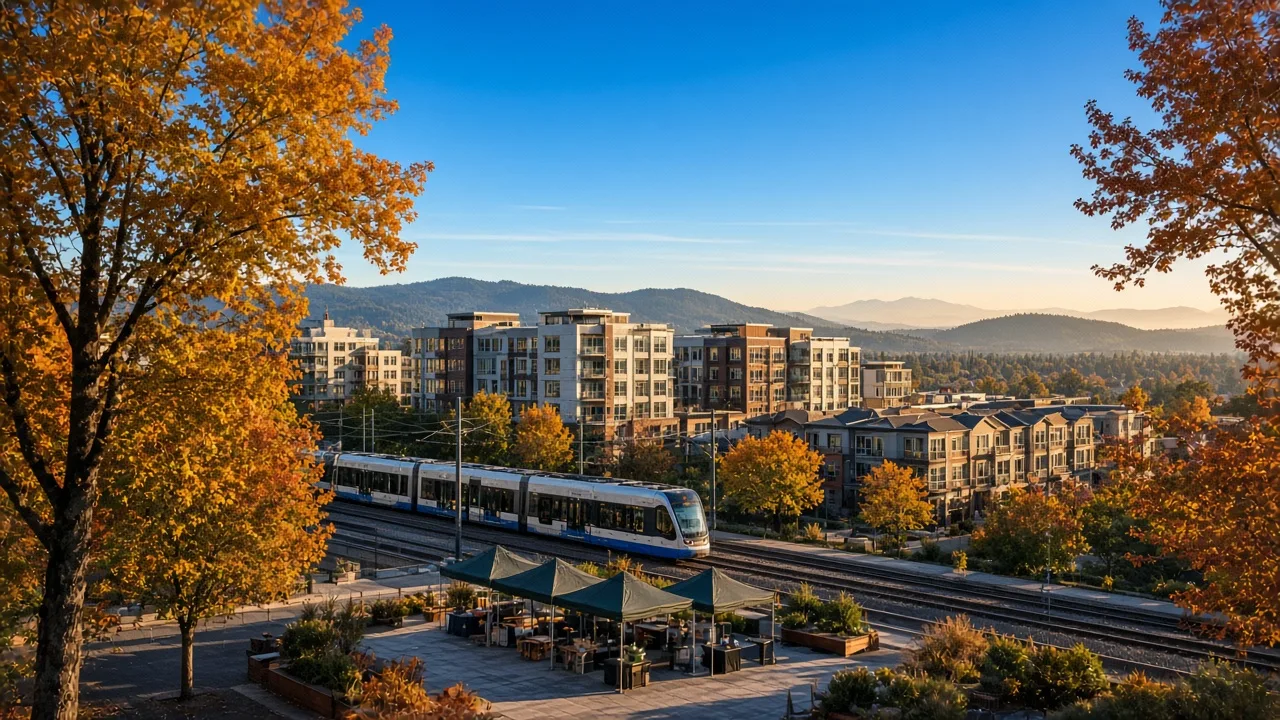
Downtown Rebuilt Around the Train · Beaverton, Oregon
Beaverton is the most active corner of our entire service area, and for the buyers and sellers we work with across Greater Portland it keeps coming up for three reasons: a walkable, mid-rise downtown being rebuilt around a light-rail line, some of the strongest school feeders in Washington County minutes from the city center, and pricing that still sits below the close-in west side while staying connected to the Silicon Forest economy. This note is our close look at what living there is actually like in 2026, from the neighborhoods and schools to the commute and what homes really sell for around Washington County.
We cover Beaverton as the most active of the eight service areas we work every day, from Hillsboro and Cornelius in the west to Sherwood, Newberg, Wilsonville, and Woodburn down the valley, and we know its neighborhoods street by street. Everything below comes from the public sources linked at the bottom of the page, and the price figures are market medians, not a promise about any single home. For the numbers on a specific neighborhood or listing, reach out and we will pull the recent sales for you.
$530K-$576K
Median price range, 2026
Redfin ~$576K over the three months ending September, down 1.8% year over year; Zillow typical value ~$530K, down about 3%
~98,000
Residents, Oregon's 7th-largest city
Census estimate near 97,800 for July 2025, with downtown redevelopment steadily adding housing
7
MAX light-rail stations in the city
Blue and Red lines plus WES commuter rail meet at Beaverton Transit Center
6
Comprehensive public high schools
Aloha, Beaverton, Mountainside, Southridge, Sunset, and Westview, plus magnet option schools
Population, school, train, and price figures from the public sources listed at the bottom of this page, retrieved November 5, 2026.
Why Beaverton Keeps Showing Up
Beaverton is Oregon's seventh-largest city, a suburban hub that has spent the last decade deliberately rebuilding the downtown it once lost to parking lots. The Round at Beaverton Central, built around the Beaverton Central MAX station, brought condos, offices, restaurants, and public plazas back to the city core, and the 550-seat Patricia Reser Center for the Arts, which opened in 2022, gave the city a venue that draws audiences from across the county. The Beaverton Farmers Market, one of the largest in Oregon, fills the downtown every Saturday from May through November, and the Downtown Loop project is widening sidewalks and adding bike lanes through the center of town, with the first phase on SW Hall Boulevard underway in 2026.
The jobs base is the other half of the story. Nike's world headquarters sits just outside the city limits at One Bowerman Drive, a campus of more than 75 buildings and roughly 11,000 employees renamed the Philip H. Knight Campus in October 2025, and the Silicon Forest corridor running west toward Hillsboro is thick with technology and engineering employers. Our service areas map shows where Beaverton sits in the region we cover, and our full Beaverton area guide goes deeper on the community, employers, and the restaurant scene.
What the Beaverton Market Looks Like in 2026
The honest headline for 2026 is a city that has come off the pandemic frenzy into a balanced market: prices a step below their peak, buyers with more choices and more leverage, and homes that still sell when they are priced and presented for this year's buyer. Here is the real picture:
- Prices are a step lower than a year ago, and the two big trackers read the same direction even though they land on different levels. Redfin's three-month median sale price for Beaverton ran near $576,000 over the three months ending September 2026, down 1.8% year over year, while Zillow's typical-home-value estimate sits closer to $530,000, down about 3%. Local advisories describe the market as balanced and gently softening, honest shorthand for a city where value is holding while leverage has moved to buyers.
- Homes still sell, just with fewer offers and more terms. Redfin scores Beaverton "somewhat competitive" at 67 out of 100, with homes averaging about two offers and going pending in roughly 33 days, faster than the 42 days of a year ago. Well-priced, well-presented homes in the strongest school feeders still draw attention quickly; the days of assuming every listing will fetch multiple offers above asking are behind the city, as they are across the metro.
- Inventory is the quiet story. Supply has climbed through 2026, and the September RMLS-based metro picture, a $545,000 median, 4.2 months of supply, and 68 days of average market time, reads balanced and a step friendlier to buyers than it has in years. Our note on the market shifting to buyers walks through the full September report.
- Condos and townhomes keep an entry point that full-size houses no longer offer. Central Beaverton's condo and townhome stock near the MAX lines and The Round regularly prices well below the single-family median, which matters more with the average 30-year mortgage at 7.24% for the week of October 29. For the deeper cost breakdown, our what homes actually cost in Beaverton guide has the payment tables.
For the payment math at the current rate environment: on Beaverton's typical-home-value range near $530,000 with 20% down, the loan is about $424,000, and at the 7.24% average 30-year mortgage principal and interest run near $2,890 a month before taxes, insurance, and any HOA dues. Our payment-by-community note compares that math across all eight service areas, and state help covers up to $60,000 of down payment assistance for eligible first-time buyers, which can move the entry math meaningfully here.
The Neighborhoods
Beaverton's neighborhoods behave like a set of distinct markets under one city name. The right one depends on whether you want walk-to-train downtown living, established tree-lined suburbs, family communities on the nature edge, or the entry-level center of the market:
Downtown Beaverton & The Round
The historic core is being rebuilt around the Beaverton Central MAX station, and The Round at Beaverton Central is the anchor: a high-density mix of condos, offices, restaurants, and public plazas split by the light rail, with the 550-seat Patricia Reser Center for the Arts next door. The Beaverton Farmers Market runs Saturdays from May through November, one of the largest markets in Oregon, and the city's Downtown Loop street improvements, with the first phase on SW Hall Boulevard underway in 2026, keep widening sidewalks and adding bike lanes. If you want to park the car on the weekend, this is the walkable heart of the city.
Cedar Mill & the North Side
North of Highway 26, long-established suburbs under mature fir and maple canopies carry Beaverton addresses, with the Bethany area at the north edge and some of the district's most sought-after school feeders. Streets are quiet, yards are established, and the trade is a few extra minutes of commute for space, light, and trees. This is where a good share of our move-up buyers end up.
Murrayhill & South Beaverton
South Beaverton is a family-oriented stretch of planned communities like Murrayhill, with parks and schools woven through the neighborhoods, and the 231-acre Cooper Mountain Nature Park, with about 3.5 miles of trails, right at the southern edge. Newer construction, wide streets, and the Tualatin Hills Park and Recreation District's network of parks and facilities make it one of the most popular corners for buyers with kids.
Five Oaks, Vose & the Cedar Hills corridor
The central band of the city holds Beaverton's original post-war neighborhoods and the busy Cedar Hills Boulevard commercial spine, with older single-family stock, smaller lots, and the closest access to the corridor's shops and services. It is also where much of the city's condo and townhome building is happening, which makes it the practical center of the entry-level market.
Schools
- Beaverton School District 48J operates six comprehensive public high schools in and around the city: Aloha, Beaverton, Mountainside, Southridge, Sunset, and Westview, along with nationally recognized option schools such as the Arts & Communication Magnet Academy, the International School of Beaverton, and the Beaverton Academy of Science and Engineering. Neighborhood elementaries and middle schools sit across each part of town, and THPRD's recreation programs give families year-round options close to home.
- As with every district we work in, the feeder pattern matters more than the district name. The high school a home feeds into can change from one side of a street to the other, so we always pull the exact school assignment for an address before clients fall in love with a house, and we recommend you do the same.
For families weighing Beaverton against Hillsboro, Tigard, or Sherwood, the honest comparison usually comes down to what a given address feeds into rather than the district name, which is why we check the exact school assignment before recommending a home. School quality also drives resale value here, as it does across the metro. Our what $500,000 buys guide shows how Beaverton compares on price to the rest of our service areas.
How the Commute Actually Works
- Beaverton sits about eight miles west of downtown Portland, and most car commutes run along Highway 26 through the Sunset corridor. In light traffic the drive to downtown runs 15 to 25 minutes; at rush hour, plan for 30 to 50, with the Hwy 26-Hwy 217 interchange and the Vista Ridge Tunnel the usual pinch points.
- Light rail is the real differentiator. The MAX Blue and Red lines both pass through Beaverton, with seven stations in the city and Beaverton Transit Center as the hub: the Blue Line connects Hillsboro, Beaverton, downtown Portland, and Gresham, the Red Line runs to Portland International Airport, and WES commuter rail heads south to Wilsonville. Very few suburbs near this price point let a household commute downtown or to PDX without a car.
- Commuting here is a two-way street. Nike's world headquarters sits just outside the city limits at One Bowerman Drive, a campus of more than 75 buildings and about 11,000 employees that was renamed the Philip H. Knight Campus in October 2025, and the Silicon Forest corridor from Beaverton out to Hillsboro is dense with tech employers. Thousands of people who live east of here drive into Beaverton every day, which is its own kind of employment stability when you are buying or selling.
The best test is the drive itself, on a weekday morning, in both directions. If Beaverton is on your shortlist, take the trip from the office you would actually commute to, and time it during rush hour, not on a Sunday afternoon. That single experiment settles more debates than any market stat we could quote, and it is the same advice we give clients looking at any of our eight service areas.
Where Locals Go
A short list of the spots we send clients and relocating families to when they are in town. These are real local businesses with their own sites:
A downtown taproom at 12675 SW 1st Street, pouring Breakside's celebrated lineup of IPAs, lagers, and seasonal brews a short walk from the MAX station.
A neighborhood coffee shop at 4590 SW Watson Avenue near the downtown core, a laid-back spot for meeting clients between showings.
The west-side outpost of the sneaker-culture coffee brand with roots in downtown Portland, at 12305 SW Broadway Street.
A Broadway Street standby at 12390 SW Broadway, serving classic Italian in an old-school, white-tablecloth setting.
A bourbon and beer spot at 3800 SW Cedar Hills Boulevard with one of the bigger whiskey lists on the west side.
Who Beaverton Is Right For
The short answer: buyers who want west-side convenience, strong schools, and honest value without downtown prices, plus a transit system that makes the car optional for the daily commute. Tech and flex workers get a short drive to the Silicon Forest or a real light-rail ride downtown and to the airport. First-time buyers get a condo and townhome market near the train, with state down payment assistance that can turn a rental payment into a mortgage. Families get the school feeders and the parks, and anyone who likes farmers markets, brewpubs, and live theater within walking distance of home has exactly that downtown.
Beaverton is our most active territory, which means we have recent sales data on nearly every neighborhood in the city, from the central condo buildings to the Cedar Mill acreage edges. If you have been reading about it and want to see it in person, the best next step is a visit and a look at the recent closings in the neighborhood you have your eye on. See the full map of our service areas for the whole range we cover, and our current listings show what is actually on the market right now, priced for this rate environment.
Sources
The figures in this note come from these public sources, retrieved November 5, 2026. Monthly payment figures are the team's own estimates from the prices and rates cited, and are not quotes.
- U.S. Census Bureau QuickFacts: Beaverton city, Oregon
Population estimate near 97,800 for July 2025, keeping Beaverton Oregon's 7th-largest city. Retrieved November 5, 2026.
- Redfin: 2026 Beaverton Housing Market
Three-month median sale price near $576,000 over the three months ending September 2026, down 1.8% year over year; about two offers, roughly 33 days to sale, and a 67/100 competitiveness score. Retrieved November 5, 2026.
- Zillow Home Values: Beaverton, OR
Typical home value estimate near $530,000, down about 3% year over year through 2026. Retrieved November 5, 2026.
- NIKE, Inc.: Nike Renames Its World Headquarters to Honor Co-Founder Philip H. Knight
The campus at One Bowerman Drive, just outside Beaverton, was renamed the Philip H. Knight Campus in October 2025. Retrieved November 5, 2026.
- City of Beaverton: BURA Portfolio Redevelopment Strategy
The city's agency for downtown redevelopment, including the mixed-use projects selected in 2025 and the Downtown Loop improvements on SW Hall Boulevard. Retrieved November 5, 2026.
- The Round at Beaverton Central
The mixed-use development around the Beaverton Central MAX station, with public plazas, condos, offices, and restaurants. Retrieved November 5, 2026.
- TriMet: MAX Light Rail Stations
The Blue and Red lines serve seven stations in Beaverton, with Beaverton Transit Center the connection point for WES commuter rail to Wilsonville. Retrieved November 5, 2026.
- Beaverton School District: High Schools
The district's six comprehensive high schools and its option and magnet schools, including ACMA and ISB. Retrieved November 5, 2026.
- Tualatin Hills Park & Recreation District: Cooper Mountain Nature Park
A 231-acre park just south of Beaverton with about 3.5 miles of trails on oak savanna and grasslands. Retrieved November 5, 2026.
- Creative Travel Guide: Best Things to Do in Beaverton
Beaverton Farmers Market (Saturdays, May through November) and the Tualatin Hills Nature Park among the city's top attractions. Retrieved November 5, 2026.
Thinking about Beaverton?
Let us pull the recent sales in the neighborhood you are eyeing, line up a school-feeder check, and walk you through the numbers for your budget. Call (971) 777-3137, write to Concierge@pennergroupproperties.com, or send a note through the contact page. You can also follow Penner Group Properties on Facebook for listings, market notes, and local events.
Talk to the Team