
For Buyers
Oregon Property Taxes, Explained
By Geri & Tim Penner · Penner Group Properties · October 16, 2026
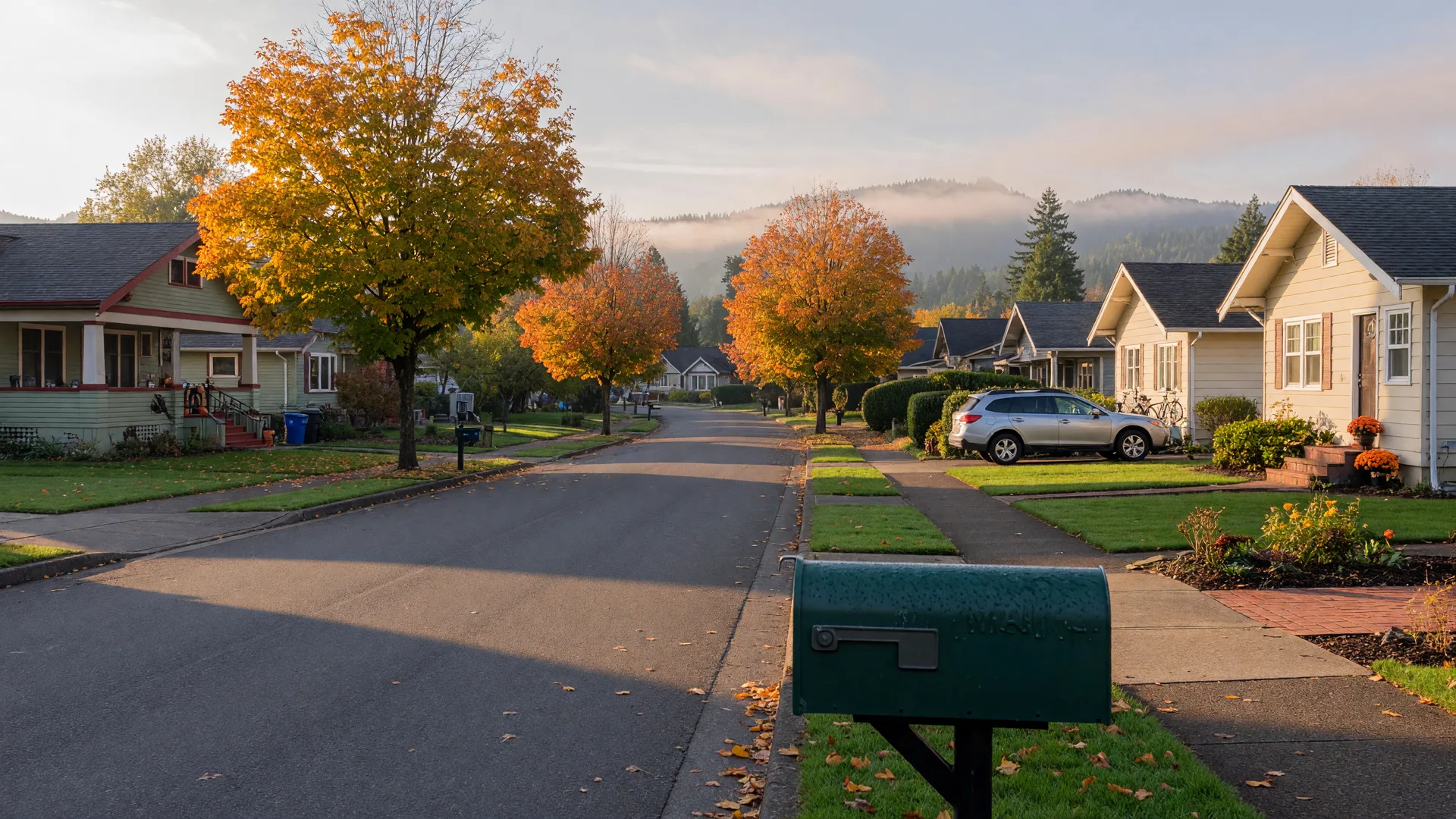
Measure 5 and Measure 50 · Greater Portland, Oregon
The Short Version
Oregon's property tax system works differently from most states, and understanding it changes how you should read a monthly payment. Two voter-passed measures set the rules: Measure 5 (1990) caps the tax rate per $1,000 of real market value, and Measure 50 (1997) decoupled your taxable assessed value from what your home is worth, capping its growth at 3% a year. In practice that means most homes carry an assessed value far below their market value, a typical effective tax rate across our counties runs near 0.8% of market value, and, crucially, buying a home does not reset the assessed value to the sale price. New construction is the big exception: brand-new homes are assessed at today's market value and can carry a noticeably higher effective rate for years. Tax statements mail in late October, and if you believe your assessment is wrong, the annual appeal deadline is December 31. This note walks through how the system works, what it means for your payment in each of our service areas, and how the appeal process works.
$5
Measure 5 education tax cap, per $1,000 of real market value
Up to $10 more per $1,000 for general government, excluding bonded debt
3%
Maximum annual growth in assessed value under Measure 50
Applied to each property's Maximum Assessed Value
~0.8%
Typical effective tax rate on a home's market value in our counties
Countywide medians; varies by taxing district and by home age
Dec 31
Annual deadline to appeal your property tax assessment
Petition must be postmarked or delivered to your county by then
The effective-rate figures are countywide medians from publicly available trackers, not an official rate book. Your exact bill depends on the specific taxing districts your address falls in. Sources are listed at the bottom of this page.
How Oregon Property Taxes Actually Work
Almost everything buyers assume about property taxes comes from states where the sale price becomes the new tax basis. Oregon is not one of those states. Two constitutional amendments, both passed by voters, define the whole system, and neither one works the way the rules in other states do.
Measure 5 (1990): the rate caps
Oregon voters approved Measure 5 in 1990 to cap property taxes. The cap works on the home's real market value: no more than $5 per $1,000 for education taxes and $10 per $1,000 for general government (city, county, and special districts), excluding bonded debt. Most homes never hit the education cap on their own, but in districts with many overlapping levies, the combined rate can exceed the limit, and that is where the system's next rule kicks in.
Measure 50 (1997): the assessed value reset
Measure 50, passed in 1997, is the rule that actually shapes your bill. It rolled each property's assessed value back to 90% of its 1995-96 value, called the Maximum Assessed Value, or MAV, and capped annual growth at 3%, no matter how fast the market moves. Your taxable assessed value is the lower of your MAV or your current real market value. Because market values across Greater Portland have risen far faster than 3% a year for most of the last three decades, a home bought long ago carries an assessed value well below what it would sell for today.
The Oregon Department of Revenue and the League of Oregon Cities both publish clear summaries of the two measures, linked at the bottom of this page. The short version for homebuyers: Oregon taxes each property on a number that is often decades behind its market value, and the system protects that lagged number from jumping when the market moves.
Assessed Value vs. Market Value: The Number That Matters
Your tax bill is based on assessed value, not market value, and the difference between the two is where most of the confusion, and most of the savings, lives:
- Real market value is what the county thinks the home would sell for, and it is the number behind Measure 5's caps.
- Assessed value is the number your tax bill is actually based on. For most homes it is the Maximum Assessed Value, drifting up 3% a year since 1997.
- The gap is the whole ballgame. A home with a market value of $600,000 might carry an assessed value of $300,000 or less, and the tax bill follows the assessed value, not the sale price.
- That is why two identical houses on the same street can have very different tax bills: one bought decades ago, one built last year. The first carries a low, capped assessed value; the second is assessed at today's construction cost and market value.
This is why the classic advice to "budget 1% to 1.25% of the price for taxes" is often wrong in Oregon. On a home with a capped assessed value, the real bill can be far lower, and on a brand-new home it can be higher. Your lender will quote a tax estimate in your loan document, but the tax record itself is the number that actually matters, and we pull it on every home we help a client buy.
What Happens When You Buy
The most surprising part of Oregon's system is also the most buyer-friendly, and it is the question we answer constantly:
- A sale does not reset the assessed value. In most states, selling a home triggers a reassessment to the new price, and buyers budget for the jump. Oregon is different: under Measure 50, the buyer keeps the seller's Maximum Assessed Value, which continues its 3% annual growth path. Buy the house next door to the same home and, taxes being equal, you inherit the same low assessed value. The sale price does not become your new tax basis.
- New construction is the big exception. When a home is substantially new or substantially improved, the county treats it as an exception to Measure 50 and assesses it at current market value. That means brand-new homes, including much of what builders are putting up in west Washington County and along the I-5 corridor, carry effective tax rates close to the statutory levels until the 3% cap compounds the assessed value away from the market over many years. Budget accordingly, and ask the builder or seller for the actual tax bill, not a projection.
- The tax bill does not move with your loan. Whether rates are at 6% or 7.4%, your property tax is calculated on assessed value and district rates, so the tax line in your payment is its own number. It still belongs in the monthly math, and it is often the piece buyers misestimate the most.
- Your payment can change as districts vote. School bonds, urban renewal areas, and emergency service levies come and go by election. A measure passing in your district raises your bill modestly; a district with a lot of new construction sometimes lowers rates by spreading the load across more assessed value. It is worth glancing at the voter's pamphlet before you buy in a fast-growing town.
The practical takeaway: when you buy a resale home, ask for the actual tax record and expect the bill to keep its current shape. When you buy new construction, expect the bill to be higher than the builder's marketing materials suggest, and budget for it. Our note on what $500,000 buys across our service areas and the buying versus renting comparison both build the full monthly picture that taxes are part of.
What This Means for Your Monthly Payment
Because assessed value lags market value, the honest way to estimate an Oregon tax bill is an effective rate on the market value, not a flat percentage of the price. Here is what that looks like in the three counties we work most, using countywide medians:
Washington County
Effective rate about 0.84%
Median home value $588,000 to $611,000; a typical annual tax bill of roughly $4,900 a year, about $410 a month.
Covers Beaverton, Hillsboro, Cornelius, Forest Grove, and Sherwood. Newer construction along the westside corridor often sits above the countywide average.
Yamhill County
Effective rate about 0.73%
Median home value near $472,000; a typical annual tax bill of roughly $3,425 a year, about $285 a month.
Covers Newberg and the wine-country towns. The lowest effective rate of the three counties we work most.
Marion County
Effective rate about 0.84%
Median home value near $416,000; a typical annual tax bill of roughly $3,490 a year, about $290 a month.
Covers Woodburn, the most affordable market in our service area. Lower price, comparable rate, smaller bill.
Add the tax line to principal and interest, insurance, and any HOA dues and you get the real monthly cost of a home. With the average 30-year mortgage near 7.40%, every line of that total matters more than it did a year ago, and taxes are the one line buyers routinely guess wrong.
Compression: Why Some Bills Look Odd
One more Oregon quirk is worth knowing, because it explains why two homes with similar values can have very different bills:
- Compression is the quiet rule that cuts taxes when they would exceed Measure 5's caps. When the combined education rate on a property pushes past $5 per $1,000 of real market value, the education portion of the bill is reduced proportionally until it fits under the cap; the same happens on the general government side above $10 per $1,000.
- It is why a property's effective rate can land well below what the printed levy rates suggest, and it is part of why Oregon homeowners in high-tax districts do not always pay the highest bills.
- Compression is a cap on taxes, not a benefit you can choose: it applies automatically, it applies after other limits, and it shifts some tax load onto non-residential and newer properties that do not compress as much.
Your Right to Appeal, Before December 31
Oregon's tax statements mail in late October, which makes right now the most useful time of year to understand this part. If you believe your home's assessed value is too high, or that a new assessment is wrong, you have a real, inexpensive path to challenge it, but it closes on December 31:
- Start with the assessor. In Washington County and most counties, the assessor's office will do an informal review of your value before you file anything formal. Often a phone call with the right comparable sales resolves it.
- File by December 31. The formal petition goes to the county clerk (in Washington County, to the Property Value Appeals Board, or PVAB), and it must be postmarked or delivered by December 31 of the current tax year. There is no filing fee, and you do not need an attorney.
- The filing window opens when statements mail. Tax statements go out in late October, and the filing period runs from then to the December 31 deadline. Late October through December is the one time of year the calendar is actually on your side.
- If you lose, you still have a path. You can appeal the board's decision to the Magistrate Division of the Oregon Tax Court within 30 days of when the board's order is mailed to you. Few homeowners go that far, but the option exists.
The appeal is about your assessed value, not your tax rate, so the argument is comparables: recent sales of similar homes that suggest your value is overstated. County assessor sites and the Oregon Department of Revenue, linked below, are the authoritative sources for your county's exact forms and deadlines.
What This Looks Like in Our Service Areas
The rules are state-wide, but the shape of your bill is local, and it varies town to town across the eight communities we work every day:
Beaverton & Sherwood
Washington County's two most active markets carry effective rates near the countywide 0.84% average, but the exact bill depends on the school and city district the address sits in. Older established neighborhoods with capped assessed values can carry bills far below the sale price implies; the same townhouse floor plan in a newer development can carry a much higher one. Always ask for the current tax record, not a guess.
Hillsboro, Cornelius & Forest Grove
The westside corridor's new construction is the place the new-construction exception bites hardest. A brand-new Hillsboro home assessed at today's market value can carry an effective rate close to statutory levels for years. Ask builders for the actual bill on a comparable completed home, and run both the current bill and the projected next-year bill before you commit.
Newberg
Yamhill County runs a slightly lower effective rate, near 0.73% of market value, which is part of Newberg's appeal for value-focused buyers. Wine-country and newer subdivisions mix old assessed values with exception values, so the range from home to home is wide. Your agent should pull the tax record on every home you seriously consider.
Wilsonville & Woodburn
Down I-5, the two towns sit in different counties: Wilsonville in Clackamas, Woodburn in Marion. Woodburn's lower median near $416,000 keeps the annual bill under roughly $3,500 even at Marion County's 0.84% effective rate, which is a real advantage for first-time buyers. Wilsonville's newer Villebois-area construction carries the new-build premium on its tax record.
The full map of our service areas shows the range we cover, and our area guides go deeper on each town, from Beaverton and Hillsboro across Washington County. Our neighborhood note on Woodburn covers the southern end of the map, where Marion County's lower prices and comparable rates make the tax math work especially well for first-time buyers.
Sources
The rules and figures in this note come from these public sources, retrieved October 16, 2026:
- Oregon Department of Revenue: A Brief History of Oregon Property Taxation
The state's own explainer of Measure 5 (1990) and Measure 50 (1997): the $5 and $10 per $1,000 caps, the 90% of 1995-96 rollback, and the 3% annual cap on assessed value. Retrieved October 16, 2026.
- League of Oregon Cities: FAQ on Measures 5 & 50
Plain-language answers on how the two measures interact, what compression is, and how assessed value is calculated, updated January 2026. Retrieved October 16, 2026.
- Clackamas County: Measures 5 and 50
A county assessor's office summary of how Maximum Assessed Value, the 3% growth cap, and compression apply to a specific property. Retrieved October 16, 2026.
- G&G Salt LLC: Does Buying Oregon Real Estate Reset the Property Tax Assessment?
Confirms that a purchase does not reset the assessed value in Oregon; the buyer keeps the seller's Maximum Assessed Value, unlike California's Proposition 13. Retrieved October 16, 2026.
- Oregon Department of Revenue: Appeals
The December 31 annual deadline to file a property tax appeal and the path through the county board to the Oregon Tax Court. Retrieved October 16, 2026.
- Oregon DOR: How to Appeal Your Property Value
The state's step-by-step guide to appealing an assessment, including the Tax Court Magistrate deadline of 30 days after the board's order. Retrieved October 16, 2026.
- Washington County: Property Value Appeals Board
Washington County's process: informal review with the assessor first, then a formal petition to the PVAB filed with the county clerk by December 31, with no filing fee. Retrieved October 16, 2026.
- SmartAsset: Washington County, OR Property Tax Calculator
Countywide effective rate near 0.84% of market value, used for the Washington County examples in this note. Retrieved October 16, 2026.
- Property Tax by State: Yamhill County, OR
Countywide effective rate near 0.73% of market value with a median home value near $472,000, used for the Newberg examples. Retrieved October 16, 2026.
- Property Tax by State: Marion County, OR
Countywide effective rate near 0.84% of market value with a median home value near $416,000, used for the Woodburn examples. Retrieved October 16, 2026.
Want the real tax record on a home you love?
We pull the actual tax record, the assessed value, and the current bill on every home we show, so you budget on the real number, not a guess. Tell us what you are considering and we will run the full monthly picture, taxes, insurance, HOA, and all. Call (971) 777-3137, write to Concierge@pennergroupproperties.com, or send a note through the contact page.
For market notes, new listings, and local events as they happen, follow the team on Facebook.
Talk to the Team