
Latest Real Estate News
Latest Real Estate News – November 19, 2026
By Tim Penner · Penner Group Properties · November 19, 2026
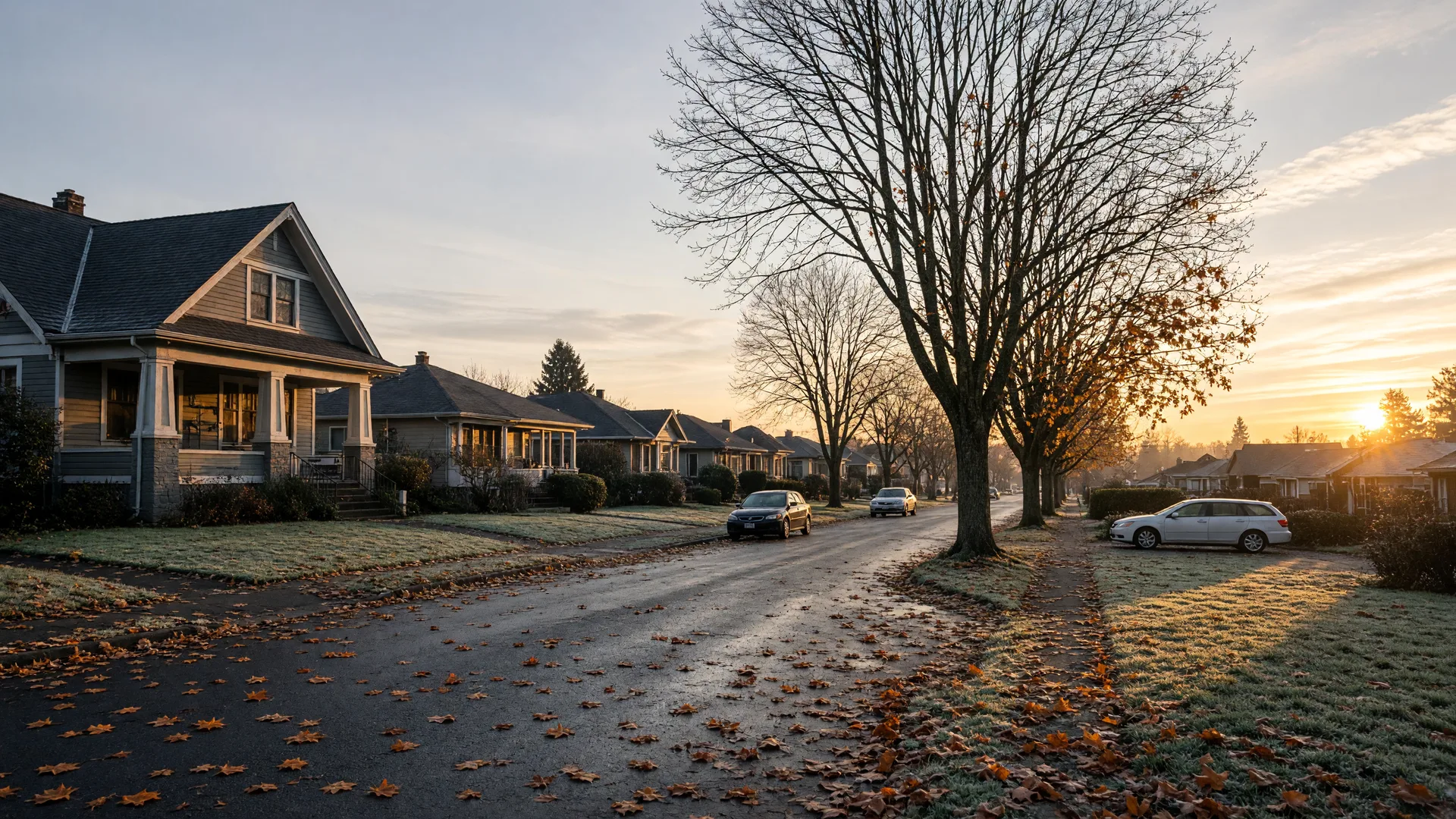
The November 19, 2026 Edition · Portland Metro & the Willamette Valley
The Short Version
This edition lands the day after the official number finally said what the daily market had been saying. Freddie Mac's survey rose to 7.28% for the week of November 19, ending a four-week run of declines and confirming the post-CPI jump, NAR's pending-sales index fell to a record-low 63.0, and October housing starts rose 9.9% even as permits fell 7.4%, a builder who finishes what is in the ground while starting little new. In the Portland metro, the October report still reads as the buyers' report of the year, a flat $545,000 median with 4.3 months of supply, and the local pipeline kept adding small-scale housing proposals. Thanksgiving is a week out, and the quietest showing week of the year is the right moment to be deliberate about rates.
We publish a dated news edition here whenever the week's numbers and headlines are worth a plain-English read for buyers and sellers across Beaverton, Hillsboro, Cornelius, Forest Grove, Sherwood, Newberg, Wilsonville, and Woodburn. This edition covers the end of the rate decline, a record-low pending-sales print, the split in the builders' data, and the local projects still moving as the holiday pause begins.
7.28%
Average 30-year fixed mortgage, week of November 19 (Freddie Mac)
Up 17 basis points from 7.11% the prior week, ending a four-week run of declines; the 30-year averaged 6.26% a year earlier
63.0
NAR Pending Home Sales Index, October (released November 18)
Down 4.7% from September and 16.7% year over year, a record low, with the West leading declines
1.309M
October housing starts, seasonally adjusted annual rate (Census Bureau/HUD)
Up 9.9% from September, even as building permits fell 7.4% and completions ran 10.4% below a year ago
$545,000
Portland metro median sale price, October 2026 (RMLS Market Action report)
Up 0.9% year over year, with 4.3 months of supply, the buyers' read of the year holding into the holiday
The mortgage figures come from Freddie Mac's PMMS and the daily trackers from Fortune, Yahoo Finance, and Forbes Advisor as reported; the pending-sales figure comes from NAR; the starts and permits figures come from the Census Bureau and HUD; the builder-confidence figure comes from the NAHB/Wells Fargo Housing Market Index; and the Portland metro figures come from the RMLS Market Action report and Realtor.com. See the sources at the bottom of this page.
The Rate Decline Ends, and the Official Number Catches Up
The official survey and the daily market finally told the same story this week. Here is what happened, and why it matters for anyone timing a move:
- The four-week run of declines is over, and the official survey now says what the daily market had been saying. Freddie Mac's Primary Mortgage Market Survey for the week of November 19 put the average 30-year fixed mortgage at 7.28%, up 17 basis points from the prior week's 7.11%, the first increase in five weeks and the first official reading to fully capture the jump that followed the October CPI report. A year earlier the 30-year averaged 6.26%. The daily trackers clustered around the new official number on November 19: about 7.30% per the Mortgage Research Center, 7.23% per Zillow purchase-rate data, and near 7.40% per Bankrate, with the 10-year Treasury holding around 5.1%. The practical lesson for anyone rate shopping is unchanged: the official trend and today's quote are different numbers, and the quote is the one you close on.
- The leading indicator is now at its lowest on record. NAR's Pending Home Sales Index for October, released Wednesday, November 18, fell to 63.0, down 4.7% from September and 16.7% from a year earlier, a record low for the index, with the West leading the declines. Pending sales are signed contracts, the truest forward look at closings, and a reading of 63 says the slow sales tape we have followed all fall is still pointing down into the new year. The four forces of a slow market, still-high rates, thin affordability, and the lock-in effect, keep compounding, and the index is that story in one number.
- The builders' report split in a way worth reading slowly. The Census Bureau and HUD reported Wednesday, November 18 that October housing starts rose 9.9% to a seasonally adjusted annual rate of 1.309 million, with single-family starts up 4.0% to 864,000, while building permits fell 7.4% to 1.295 million, the weakest permit reading in years, and completions ran 10.4% below a year ago. Starts measure groundbreakings on already-permitted projects; permits measure the pipeline of new ones. The two moving in opposite directions is a builder finishing what is in the ground while declining to start much new, which is exactly what deeply depressed sentiment looks like in the data.
- And the sentiment number is more than a mood ring. The November NAHB/Wells Fargo Housing Market Index fell to 25 from 29 in October, the lowest reading in more than fourteen years, with buyer traffic at 16, reported Tuesday, November 17. Builders are cutting prices and paying incentives because that is what still moves inventory at current rates, and the permit data above says they are not planning a big comeback until the rate picture changes. For buyers, discounted new construction remains one of the few places where the sticker price is not the whole story.
Our note on the 7.11% reading walked through the survey timing that explained the split; this week the split closed. The practical version for any buyer: the official trend is no longer lower, so lock when you like a number, not when you hope for one, and the December meeting is the hinge left in the year.
The Fed remains on hold at a target range of 3.75% to 4.00% and meets next on December 8-9 with a Summary of Economic Projections. A hike is priced as near certain after the hot October CPI report and this week's record-low pending-sales print, so the honest read for a transaction is today's quote, not a survey low that has already passed.
Portland Metro: The Buyers' Read Holds Into the Holiday
The October report is still the freshest full read of the metro, and the local pipeline kept producing small, concrete wins. Here is what the week's local news means:
- The October report is still the freshest full read of the metro, and nothing this week changed its headline. RMLS put the Portland metro median at $545,000, up 0.9% year over year, with closed sales of 1,622, down 21.5%, 4.3 months of supply, the most of the year, and about 67 days of average market time. Realtor.com's October read of the metro showed active listings up 9.6% year over year to 8,835 while the median list price eased 3.2% to $580,000: a market where sellers still price optimistically at the top of the funnel, and buyers are meeting them lower on the data that counts.
- The supply pipeline is still quietly adding small-scale housing. The Daily Journal of Commerce's November 16 land-use intakes included an early-assistance proposal to demolish a single-family home and build a three-story, six-unit multifamily building on the site, one of many small infill projects that Oregon's land-use changes are pushing forward. Portland Permitting and Development also issued a decision November 17 on a multilot development serving lots off SE 132nd Avenue and SE 130th Place, and the 16-unit townhome proposal at 6871 NE Prescott Street, moving under the SB 1537 Mandatory Adjustment Review that requires the city to grant zoning adjustments for housing, is still open for public comment.
- Two state laws are quietly reshaping what Portland can build. SB 1521, enacted this year as 2026 Oregon Laws Chapter 79, bars cities and counties in the Portland metro from enforcing inclusionary-zoning affordability mandates on new multiunit housing unless they first calculate the developer's expected loss and offset it with cash, tax breaks, or fee waivers, with the rental-housing provisions taking effect January 1, 2028 and the remaining requirements applying to all new housing by January 1, 2029. SB 1537 is the mandate-adjustment law behind the NE Prescott townhome proposal. Neither changes tonight's inventory, but both move the city's buildable math, and both are worth knowing when you hear the claim that Portland cannot build.
Our full read on the October report digs into the closed, pending, and listings numbers, and the note on the market shifting toward buyers explains the mechanics of leverage at 4.3 months of supply.
What This Looks Like Across Our Service Areas
A metro median only matters if it turns into a plan for your town. With the 7.28% print settling the rate question, the property tax deadline behind us, and Thanksgiving a week out, here is how the week reads in the communities we serve every day:
Beaverton & Sherwood
Washington County stays our most active territory, and October's slower, stable-price conditions show up most clearly there: typical prices near $530K in Beaverton and about $631K in Sherwood, with the strongest demand close to the MAX lines, the Tigard and Sherwood corridors, and well-regarded school districts. The 7.28% print closes the survey-versus-daily gap we have flagged for two weeks, which simplifies the advice: today's quote is the market, so lock when you like a number rather than waiting for the survey to come back down. See what homes cost in Beaverton and our Sherwood spotlight.
Hillsboro, Cornelius & Forest Grove
The technology corridor keeps household incomes and demand steady, and new construction in west Washington County frequently comes with lender incentives or builder buydowns that directly answer the rate environment. With builder confidence at a fourteen-year low and roughly two in five builders nationally cutting prices, the builders who want a December close are the ones still offering concessions, so ask what a builder is offering before you assume the sticker price is the whole story. Our Hillsboro, Cornelius, and Forest Grove guides cover the local picture.
Washington County note
One calendar item just settled: Oregon's 2026-27 property tax bill was due Monday, November 16, with a 3% discount for full payment and 2% for two-thirds. If you paid it, the discount is banked, and if your escrow account held the payment, the coupon was handled for you at the county treasurer's office. With the tax date behind us and Thanksgiving a week out, the next dates that matter are the October new-home-sales report on November 25 and the Fed's December 8-9 meeting.
Newberg
Wine-country living keeps Newberg a steady blend of commuters and locals, with mid-$500K medians that keep the rate math workable even near 7.3%. The market is smaller and slower paced than the metro core, which suits sellers who price realistically and buyers who want room to compare through the quiet holiday weeks. If your property tax bill sat in escrow, last Monday's deadline passed without a move from you. See our Newberg guide.
Wilsonville & Woodburn
Down I-5, the two ends of the payment spectrum: Wilsonville's typical home near $648K produces the largest monthly number in our service area, while Woodburn near $425K produces the smallest, which is why Woodburn keeps drawing first-time and move-up buyers even at 7%-plus rates. Oregon's down payment assistance, up to $60,000 or 20% of the purchase price for eligible first-time and first-generation buyers, is still taking applications, and in Woodburn it often does more for a monthly payment than a quarter point either way. See living in Wilsonville and living in Woodburn.
Every one of these communities has its own rhythm, and the full map of our service areas shows the range we cover, from the metro core to the Willamette Valley.
Oregon Notebook: Settled Taxes, Rent Caps, and Down Payment Help
Three Oregon items belong on every homeowner's calendar, one of them now behind us:
- Property taxes: the deadline has passed. Oregon's 2026-27 bill was due Monday, November 16, with the 3% full-payment discount and the 2% two-thirds discount now locked in for anyone who paid. If your escrow account held the payment, the coupon was handled automatically. Our property tax explainer covers why a bill can rise even when a value estimate falls.
- The statewide rent increase cap is 9.5% for 2026. The Department of Administrative Services' rent stabilization figures set the year's maximum rent increase at 9.5% for most residential tenancies, with a separate 6% cap for larger mobile home parks. It matters for renters weighing a move against a renewal, and for owners setting expectations for next year.
- Down payment help is still open. Oregon Housing and Community Services' Down Payment Assistance offers eligible first-time and first-generation buyers up to $60,000 or 20% of the purchase price, whichever is less. With the October report confirming a buyers' market in the Portland metro, that assistance often does more for a monthly payment than waiting for a quarter point. See our down payment assistance guide.
What We Are Watching Next
Four dates sit on the calendar between now and the new year for anyone planning a move:
- Wednesday, November 25: the Census Bureau and HUD publish new home sales for October, the last national housing report before Thanksgiving.
- Thursday, November 26: Thanksgiving. Showings fall to their yearly low through the weekend, and the buyers still touring are the ones with a move to make.
- Early December: the first Freddie Mac survey after the holiday will show whether 7.28% is a new plateau or a bounce.
- December 8-9: the Fed's final scheduled meeting of 2026, with a rate hike priced as near certain after the October CPI report and the record-low pending-sales print.
If you are weighing a move and want the week's numbers put on a calendar that fits your town, our Thanksgiving week guide covers what the holiday pause actually does to showings, listings, and closing timelines in the Portland metro.
Sources
The figures in this note come from these public reports and coverage, retrieved November 19, 2026. Payment and town-level commentary are the team's own reading of the data, not quotes, and nothing here is a forecast we would ask you to bet on.
- Freddie Mac: Mortgage Rates Average 7.28% (November 19, 2026 release)
The weekly Primary Mortgage Market Survey put the average 30-year fixed mortgage at 7.28% for the week of November 19, 2026, up from 7.11% the prior week; the 30-year averaged 6.26% a year earlier. Retrieved November 19, 2026.
- Freddie Mac: Primary Mortgage Market Survey archive
Confirms the rate path: 7.18% for the week of November 5, 7.11% for the week of November 12, and 7.28% for the week of November 19. Retrieved November 19, 2026.
- Fortune: Mortgage rates, Thursday, November 19, 2026
Daily 30-year conforming averages ran near 7.30% per the Mortgage Research Center on November 19, 2026, with the 10-year Treasury near 5.1%. Retrieved November 19, 2026.
- Yahoo Finance: Mortgage rates, Thursday, November 19, 2026
Zillow purchase-rate data put the 30-year fixed near 7.23% on November 19, 2026. Retrieved November 19, 2026.
- Forbes Advisor: Mortgage Rates Today, November 19, 2026
Confirms the daily 30-year range near 7.2% to 7.4% on November 19, 2026, with Bankrate near 7.40%. Retrieved November 19, 2026.
- NAR: Pending Home Sales Decreased 4.7% in October
The October 2026 Pending Home Sales Index, released November 18, 2026, fell to 63.0, a record low, down 4.7% month over month and 16.7% year over year, with the West leading declines. Retrieved November 19, 2026.
- US Census Bureau / HUD: New Residential Construction, October 2026
Released November 18, 2026: housing starts at a seasonally adjusted annual rate of 1.309 million, up 9.9% from September; building permits at 1.295 million, down 7.4%; completions at 1.272 million, down 10.4% year over year. Retrieved November 19, 2026.
- Reuters (via the Miami Herald): US single-family housing starts rebound in October; building permits plunge
Coverage of the November 18, 2026 Census/HUD release, including the 4.0% rise in single-family starts to 864,000 and the decline in permits. Retrieved November 19, 2026.
- RealtyWire: October Housing Starts Jump 9.9% as Permits Hit 2020 Low
Notes the permit reading as the weakest in years on the November 18, 2026 release. Retrieved November 19, 2026.
- NAHB: Housing Market Index
The November 2026 index fell to 25 from 29 in October, the lowest reading since April 2012, with buyer traffic at 16. Retrieved November 19, 2026.
- Reuters (via MarketScreener): US homebuilder sentiment tumbles to more than 14-1/2-year low in November
Confirms the November 2026 NAHB/Wells Fargo Housing Market Index at 25, released November 17, 2026. Retrieved November 19, 2026.
- RMLS: Portland metro Market Action report, October 2026
Portland metro October 2026 figures: median sale price $545,000, up 0.9% year over year; closed sales 1,622, down 21.5%; 4.3 months of supply; about 67 days of average total market time. Retrieved November 19, 2026.
- Realtor.com: Portland Real Estate Market, October 2026
October 2026 metro figures: active listings up 9.6% year over year to 8,835, with the median list price down 3.2% to $580,000. Retrieved November 19, 2026.
- Daily Journal of Commerce: Land-use review intakes, November 16, 2026
The November 16 roundup flagged the 150-unit affordable project at 8066 SW Capitol Hill Road and an early-assistance proposal for a three-story, six-unit multifamily building that would replace a single-family home. Retrieved November 19, 2026.
- City of Portland: Land Use Decision LU 26-066648 (multilot development)
A November 17, 2026 decision on a multilot development serving lots off SE 132nd Avenue and SE 130th Place. Retrieved November 19, 2026.
- City of Portland: Public notice of land-use proposal, 6871 NE Prescott St (LU 26-080888)
The November 17, 2026 notice invites public comment on a proposed 16-unit townhome development under SB 1537 Mandatory Adjustment Review. Retrieved November 19, 2026.
- Oregon Legislature: SB 1521 (2026)
Prohibits Portland metro cities and counties from enforcing inclusionary-zoning affordability mandates on multiunit housing without first calculating and offsetting the developer's expected loss, with the rental-housing provisions operative January 1, 2028 and the requirements applying to all new housing by January 1, 2029. Retrieved November 19, 2026.
- Oregon Laws 2026, Chapter 79 (SB 1521 enacted text)
The enacted text of SB 1521 from the 2026 legislative session. Retrieved November 19, 2026.
- US Census Bureau: New Residential Sales release schedule
The October 2026 new home sales report is scheduled for November 25, 2026; September new home sales were 676,000 at a seasonally adjusted annual rate. Retrieved November 19, 2026.
- Federal Reserve: FOMC calendar
The FOMC's final scheduled meeting of 2026 is December 8-9, with the target range at 3.75% to 4.00% after the October 28-29 hold. Retrieved November 19, 2026.
- Oregon Housing and Community Services: Down Payment Assistance
OHCS Down Payment Assistance offers eligible first-time and first-generation buyers up to $60,000 or 20% of the purchase price, whichever is less. Retrieved November 19, 2026.
Not sure what this week means for your move?
We track pending and sold data across the Portland metro, Washington County, and the Willamette Valley all month long, and we read the national reports the way you would hope your team does. Call (971) 777-3137, write to Concierge@pennergroupproperties.com, or send a note through the contact page, and we will walk through the rates, the numbers, and your plan, whether you are buying, selling, or just being curious.
Talk to the Team