
Latest Real Estate News
Latest Real Estate News – November 24, 2026
By Tim Penner · Penner Group Properties · November 24, 2026
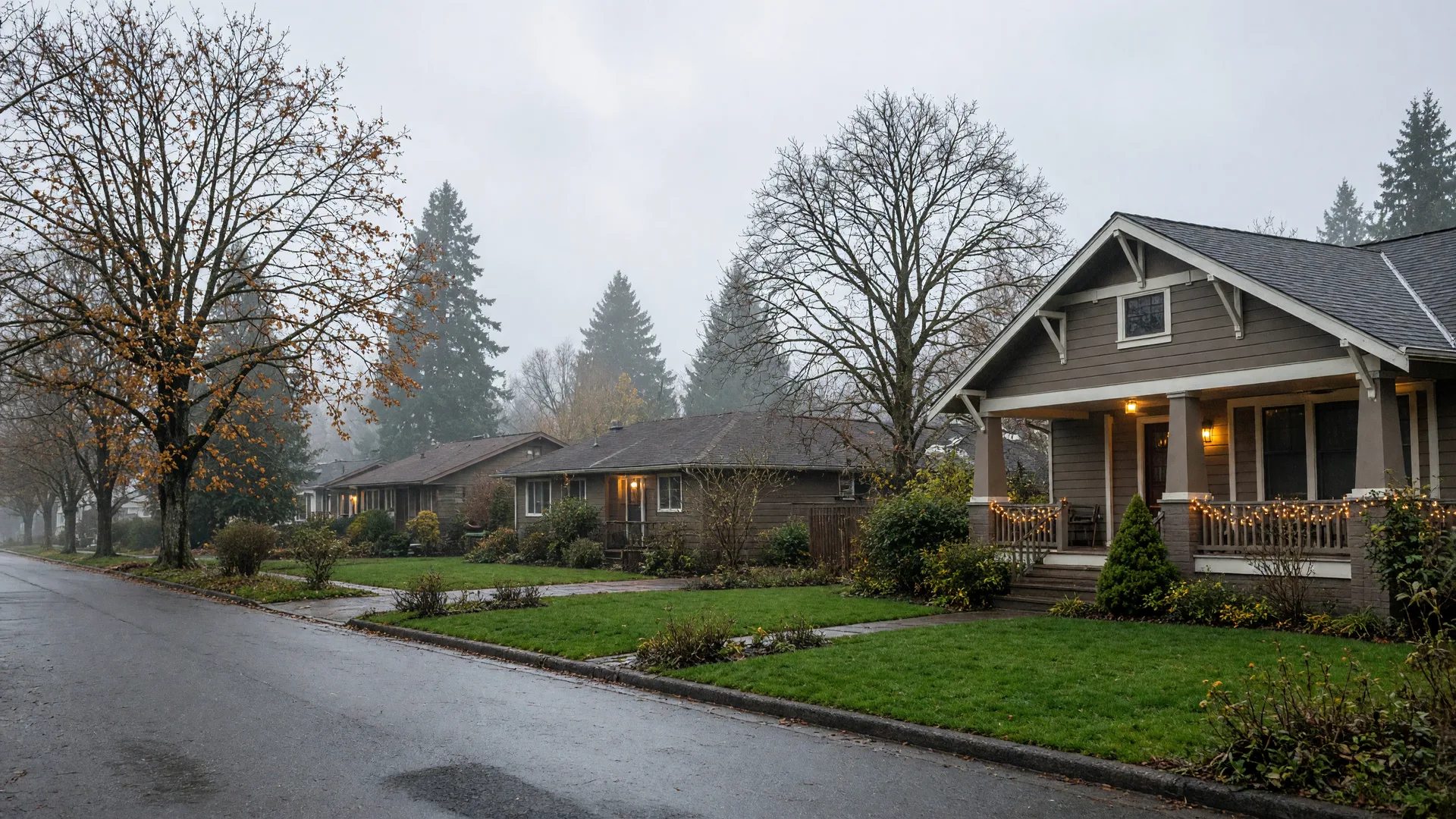
The November 24, 2026 Edition · Portland Metro & the Willamette Valley
The Short Version
Thanksgiving week opened with the market settling into its December read: CME FedWatch priced a quarter-point Fed hike at the December 8-9 meeting at roughly 91.5% to 93.5%, eased from near-certain, as the 10-year Treasury held near 4.92% to 4.94% after five straight declines, Freddie Mac's official survey sat at 7.28%, and Bankrate's daily average ran near 7.40%. Nationally, coverage this week titled the market honestly: sales slumping, prices not falling. In Oregon, the $30 million more approved for the Monarca affordable project in North Portland sharpened the state's affordable-housing budget debate, construction is underway at the 59-unit Garfield Commons, the Inner Eastside zoning overhaul moved onto the fast track, and a church returned land to NAYA for elder housing. The metro's October report still stands as the buyers' read of the year, a $545,000 median with 4.3 months of supply, and Thanksgiving is two days out.
We publish a dated news edition here whenever the week's numbers and headlines are worth a plain-English read for buyers and sellers across Beaverton, Hillsboro, Cornelius, Forest Grove, Sherwood, Newberg, Wilsonville, and Woodburn. This edition covers the Fed's odds easing into the last meeting of the year, the two-number rate story heading into the holiday, the national sales tape that is slow but not falling, and Portland's housing pipeline and land moves from the week before Thanksgiving.
91.5% to 93.5%
Market odds of a quarter-point Fed hike at the December 8-9 meeting (CME FedWatch)
Week of November 20-23; eased from near-certain after the October minutes, with about a 6.5% chance of a hold and the half-point idea off the table
7.40%
Bankrate national average, 30-year fixed, Monday November 23
Above Freddie Mac's official 7.28% survey for the week of November 19; the holiday-shortened next survey lands Wednesday, November 25
$30M
Additional Oregon Housing Stability Council funding for Monarca, North Portland, reported November 22
Brings the stalled 57-unit project's reported cost to about $56.2 million, nearly $1 million per apartment
59
Affordable apartments rising at Garfield Commons, NE Portland's King neighborhood
Six-story building at 3838 NE Garfield Ave, construction underway, serving households up to 60% of area median income
The hike-odds figures come from CME FedWatch as tracked by Admiral Markets and Investing.com; the Treasury figure comes from Advisor Perspectives and YCharts; the mortgage figures come from Freddie Mac's PMMS and Bankrate's daily average; the Monarca figure comes from Connect CRE; and the Portland metro figure comes from the RMLS Market Action report. See the sources at the bottom of this page.
The Week Before the Fed: Hike Odds Ease, and the Rate Story Holds Its Two Numbers
The rate story settled into Thanksgiving week with the market's December read calibrated and the survey still lagging the daily tape. Here is what happened, and why it matters for anyone timing a move:
- The week before Thanksgiving quietly recalibrated the market's read on the Fed. In the days after the October minutes showed nearly all officials expecting a hike, futures priced a December move as a near-certainty. In the week of November 20-23, CME FedWatch put the probability of a quarter-point hike at the December 8-9 meeting at roughly 91.5% to 93.5%, eased from fully priced, with about a 6.5% chance of a hold and essentially no chance of a half-point step. The decision and the year's first dot plot, the Summary of Economic Projections, land together at 2:00 PM Eastern on Wednesday, December 9, and Chair Kevin Warsh has said the Fed will hold fewer meetings in 2027, so this one projection release carries real weight. JPMorgan and Deutsche Bank both forecast quarter-point hikes at each of the December, January, and March meetings, which remains the base case the market is slowly settling into. Our preview of the December meeting walks through the decision, the dot plot, and what a priced-in hike actually does to a mortgage market.
- The rate picture into the holiday is a two-number story, and the gap between them is the honest one. The official reading is Freddie Mac's 7.28% for the week of November 19, the first increase in five weeks and the first survey to fully capture the post-CPI jump. The practical reading is the daily tape: Bankrate's national 30-year average sat near 7.40% on Monday, November 23, with the 10-year Treasury holding around 4.92% to 4.94% after falling five straight sessions from about 5.10% mid-month. The next Freddie Mac survey, due Wednesday, November 25 on the holiday-shortened schedule, is the first test of whether the Treasury's slide shows up in the official mortgage number at all. For a transaction today, the weekly survey is a lagging temperature and today's quote is the one you close on, which is why a lock made this week still answers a December close at a number you already know.
- The national sales tape reads the way the rate story says it should, and this week's coverage finally said it out loud: sales are slumping and prices are not falling. NAR's October existing-home sales report, already out, put the annual pace at 3.75 million, the slowest since 2010, with the median price up 0.4% to $416,700, and industry coverage this week framed the same picture: pending sales near record lows, high-intent shoppers at a new low, and brokerages bracing for a hard winter of thin volume. The lock-in effect, rates near 7.3%, and a buyer pool that has simply stopped being in a hurry compound one another, and nothing in the week changed the central read: a national market that is slow, flat in price, and waiting on the Fed's projections before it makes up its mind about 2027.
Our preview of the December 8-9 meeting walks through the decision, the dot plot, and what a priced-in hike changes, and the note on the 7.28% reading has the full payment math. The practical version for any buyer: the weekly survey is a lagging temperature, today's quote is the one you close on, and a lock made this week still covers a December close.
Portland Metro: The Funding Story Sharpens, and the Pipeline Keeps Moving
The October report is still the freshest full read of the metro, a $545,000 median with 4.3 months of supply, and the week before Thanksgiving was mostly about how Oregon pays for housing, what Portland will allow to be built, and one land return worth celebrating. Here is what it means:
- The state's most expensive affordable-housing project got more public money, and the debate over it sharpened. Reporting from Connect CRE on November 22 said the Oregon Housing Stability Council approved an additional $30 million for Monarca, the stalled 57-unit North Portland project, bringing its reported total cost to about $56.2 million, nearly $1 million per apartment. That is the same project the November 20 edition flagged at about $985,500 per unit, and the careful read is unchanged: this is a spending-accountability story, not a housing-production story. Oregon still needs tens of thousands of homes, and a project that costs this much per unit guarantees that how the state pays for housing, and whether it can build more cheaply, will be the central housing debate of the 2027 session.
- The local supply pipeline added a visible anchor this week. We Are Portland reported November 23 that construction is underway on Garfield Commons, a six-story, 59-unit affordable apartment building at 3838 NE Garfield Avenue in the King neighborhood, serving households up to 60% of area median income and expected to open by the end of April 2028. It is a single site, but it is exactly the kind of project a slow market needs to keep building through the holiday pause: committed money, city approvals, and cranes, not headlines waiting on the Fed.
- Portland's zoning overhaul for the Inner Eastside is on a fast track. KATU reported the City Council has directed staff to expedite the Inner Eastside housing plan, the stretch roughly from SE Powell Boulevard to NE Fremont Street between 12th and 60th Avenues, with a report back in 90 days and a target of zoning changes reaching council by June 30, 2027. The idea is to allow more housing types beyond detached single-family homes in the neighborhoods people actually want to live in, and it joins the Central City amendments that cleared council on November 12 as the second piece of Portland's zoning pipeline heading into the new year.
- A land return in Northeast Portland is the week's warmest housing story. KOIN reported the Oregon Lutheran Synod has transferred the former Bethany Lutheran Church property at NE Skidmore Street and 37th Avenue back to the Native American Youth and Family Center (NAYA) for permanent affordable elder housing in the Indigenous Cultural Corridor. A church congregation returning land to the community it belongs to, for housing that the neighborhood has waited on for years, is a reminder that a lot of the region's most meaningful housing progress never shows up in a rate chart.
Our full read on the October report digs into the closed, pending, and listings numbers, and the note on the market shifting toward buyers explains the mechanics of leverage at 4.3 months of supply.
What This Looks Like Across Our Service Areas
A metro median only matters if it turns into a plan for your town. With the official survey at 7.28%, daily averages near 7.40%, the Fed meeting two weeks out, and Thanksgiving on Thursday, here is how the week reads in the communities we serve every day:
Beaverton & Sherwood
Washington County stays our most active territory into the holiday week, with typical prices near $530K in Beaverton and about $631K in Sherwood, and the strongest demand close to the MAX lines, the Tigard and Sherwood corridors, and well-regarded school districts. The two-week math is simple: the official survey sits at 7.28%, Bankrate's daily average near 7.40%, and a rate locked this week still covers a December close, so lock when you like a number rather than waiting for the holiday-shortened survey on November 25. See what homes cost in Beaverton and our Sherwood spotlight.
Hillsboro, Cornelius & Forest Grove
The technology corridor keeps household incomes and demand steady through the holidays, and new construction in west Washington County frequently carries lender incentives or builder buydowns that directly answer a 7.3%-plus rate world, often available on a timeline that still closes before the new year. Typical prices near $548K in Hillsboro, $500K in Cornelius, and $485K in Forest Grove keep the math workable, and the builders who want a January count are the ones offering concessions now. Our Hillsboro, Cornelius, and Forest Grove guides cover the local picture.
Washington County note
The county's market is the metro's story at a slightly steadier pace: prices holding near their typical levels, a thinner buyer pool, and roughly half of active listings carrying price reductions in the October report. The 2026-27 property tax bill is settled, it was due Monday, November 16, and Thanksgiving is Thursday, so the next dates that matter are the holiday-shortened Freddie Mac survey and the October new-home-sales report on Wednesday, November 25, then the Fed's December 8-9 meeting, where the hike is priced around 91.5% to 93.5%.
Newberg
Wine-country living keeps Newberg a steady blend of commuters and locals, with mid-$500K medians that keep the rate math workable even with the official survey at 7.28% and daily averages near 7.40%. The market is smaller and slower paced than the metro core, which suits buyers who want to compare quietly through the holiday week and sellers who price against October's closed sales rather than last year's. A lock made this week still covers a December close, and the quietest showing week of the year is the moment to be deliberate. See our Newberg guide.
Wilsonville & Woodburn
Down I-5, the two ends of the payment spectrum frame the rate question best: Wilsonville's typical home near $648K produces the largest monthly number in our service area, so its buyers feel every basis point and gain the most from locking before December 8-9, while Woodburn near $425K produces the smallest, which is why it keeps drawing first-time and move-up buyers even at 7%-plus rates. Oregon's down payment assistance, up to $60,000 or 20% of the purchase price for eligible first-time and first-generation buyers, remains open, and in Woodburn it often does more for a monthly payment than a quarter point either way. See living in Wilsonville and living in Woodburn.
Every one of these communities has its own rhythm, and the full map of our service areas shows the range we cover, from the metro core to the Willamette Valley.
Oregon Notebook: Rural Land, Zoning Bonuses, and the 2027 Funding Debate
Three Oregon items landed in the holiday run-up, and together they frame the state's housing debate heading into 2027:
- A statewide land-use debate is heading to a hearing on December 4. At Governor Kotek's request, the Department of Land Conservation and Development is weighing rule changes that would ease housing development in unincorporated rural communities, and critics such as LandWatch Lane County's Lauri Segel are warning the proposal could effectively suburbanize rural Oregon. The hearing is set for Eugene City Hall, and for anyone who tracks Oregon housing it is the clearest sign yet that the 2027 session's housing fight will include rural land, not just the metro. The rural-rule debate is also a reminder that Oregon's housing shortage is not only a Portland problem: housing costs run high in small towns across the state, and what unincorporated Oregon is allowed to build shapes who can afford to live there.
- Portland published new updates to its Housing Bonus Alignment Project this month, inviting testimony on revising the city's zoning bonuses so that they more directly reward affordable and accessible housing and units with more bedrooms. It is quiet, wonk-level process work, the kind that reads dull in a headline and matters enormously in a build: zoning bonuses are one of the few levers a city has to push for larger family-sized units without spending general-fund dollars. The comment window running into December pairs with the Central City and Inner Eastside work as the three pieces of Portland's zoning agenda for the new year.
- The Monarca funding, the 187-home round the Housing Stability Council approved on November 19, and the rural-rule hearing all land in the same two weeks, and together they frame Oregon's 2027 housing debate: how much housing the state funds, how much each unit costs when it gets built, and where future construction is allowed at all. For buyers and sellers the practical through-line is unchanged, state programs are still funding, down payment assistance remains open to eligible first-time and first-generation buyers at up to $60,000 or 20% of the purchase price, and the homes planned today are the supply that decides the market in 2028 and beyond.
What We Are Watching Next
Four dates sit on the calendar between now and the new year for anyone planning a move:
- Tuesday, November 24: the S&P CoreLogic Case-Shiller index for September lands, the last major national price gauge before the holiday, on a week of deliberately light, holiday-shortened data flow.
- Wednesday, November 25: the holiday-shortened Freddie Mac survey and the Census Bureau's new home sales report for October (September was at a 676,000 seasonally adjusted annual rate). This is the first test of whether the Treasury's five-session slide shows up in the official mortgage number.
- Thursday, November 26: Thanksgiving. Showings fall to their yearly low through the weekend, and the buyers still touring are the ones with a move to make, often pre-approved and working toward a December 31 close.
- December 8-9: the Fed's final scheduled meeting of 2026. The rate decision and the first dot plot land together at 2:00 PM Eastern on Wednesday, December 9, with a quarter-point hike to 4.00% to 4.25% priced around 91.5% to 93.5%, and nearly everything about 2027 riding on the projections.
If you are weighing a move and want the week's numbers put on a calendar that fits your town, our Thanksgiving week guide covers what the holiday pause actually does to showings, listings, and closing timelines in the Portland metro, and the year-end closing playbook walks through the calendar town by town.
Sources
The figures in this note come from these public reports and coverage, retrieved November 24, 2026. The hike-odds figures come from CME FedWatch as tracked by Admiral Markets and Investing.com; the Treasury figures come from Advisor Perspectives, YCharts, and Trading Economics; the mortgage figures come from Freddie Mac's PMMS and Bankrate's daily average as reported by The Mortgage Reports; the national sales figures come from NAR's existing-home sales report; the Monarca funding figure comes from Connect CRE; the Garfield Commons and NAYA reports come from We Are Portland and KOIN; the zoning items come from KATU, Wisevoter, and the City of Portland; and the Portland metro figure comes from the RMLS Market Action report. Payment and town-level commentary are the team's own reading of the data, not quotes, and nothing here is a forecast we would ask you to bet on.
- Admiral Markets: Fed Meeting December 2026, Date and Time, Rate Hike Odds
Preview of the December 8-9, 2026 FOMC meeting: the decision and the first Summary of Economic Projections (dot plot) arrive 2:00 PM ET on Wednesday, December 9; CME FedWatch priced a 25-basis-point hike to 4.00% to 4.25% at roughly 91.5% to 93.5% in the week of November 20-23. Retrieved November 24, 2026.
- Investing.com: Fed Rate Monitor
Alternative rate tracker reading about 95.7% odds of a December hike to 4.00% to 4.25% in late November 2026. Retrieved November 24, 2026.
- Advisor Perspectives: Treasury Yields Snapshot, November 20, 2026
The 10-year Treasury yield fell five straight sessions to roughly 4.92% to 4.95% by November 20, 2026, after touching about 5.10% around November 12, with yields holding near that level into November 23. Retrieved November 24, 2026.
- YCharts: 10 Year Treasury Rate
Daily 10-year Treasury series confirming the mid-month peak and the five-session decline into the week of November 20-23, 2026. Retrieved November 24, 2026.
- Trading Economics: US Treasury Yields Fall for 5th Session
Coverage of the November 20, 2026 close: the 10-year Treasury at its lowest in about a week on safe-haven demand. Retrieved November 24, 2026.
- Freddie Mac: Mortgage Rates Average 7.28%
Freddie Mac's Primary Mortgage Market Survey for the week of November 19, 2026: 30-year fixed at 7.28%, up from 7.11% and the first increase in five weeks. Retrieved November 24, 2026.
- The Mortgage Reports: Mortgage Rates Today, November 23, 2026
Bankrate's national 30-year fixed average sat near 7.40% as of Monday, November 23, 2026, above the official 7.28% survey. Retrieved November 24, 2026.
- NAR: Existing-Home Sales Decreased 5.5% in October
October existing-home sales ran at a 3.75 million seasonally adjusted annual rate, the slowest since 2010, with the median price up 0.4% to $416,700. Retrieved November 24, 2026.
- The Close: Home Sales Are Slumping, but Prices Aren't Falling Much
November 23, 2026 industry overview of the slow-volume, flat-price national market heading into winter. Retrieved November 24, 2026.
- Inman: Why the real estate industry is bracing for a harsh winter
November 23, 2026 reporting on low pending-sales volume, falling high-intent shopper counts, and the industry's winter outlook. Retrieved November 24, 2026.
- Connect CRE: New Funding Brings Cost of Portland Affordable Housing Project to Nearly $1M per Unit
November 22, 2026 report: the Oregon Housing Stability Council approved an additional $30 million for Monarca, the stalled 57-unit North Portland project, bringing reported cost to about $56.2 million. Retrieved November 24, 2026.
- We Are Portland: 59 Affordable Apartments Rise in Northeast Portland
November 23, 2026 report on construction at Garfield Commons, a six-story, 59-unit affordable building at 3838 NE Garfield Ave serving households up to 60% of area median income. Retrieved November 24, 2026.
- KATU: Portland eyes diverse housing plan for Inner Eastside neighborhoods
The City Council is directing staff to expedite the Inner Eastside housing plan from SE Powell Boulevard to NE Fremont Street, with a report back in 90 days and a June 30, 2027 target. Retrieved November 24, 2026.
- Wisevoter: Portland Council Orders Faster Inner Eastside Zoning Review
November 24, 2026 summary of the council's direction to expedite Inner Eastside zoning changes toward council consideration by June 30, 2027. Retrieved November 24, 2026.
- KOIN: Portland church returns ancestral land to create affordable indigenous housing
November 20, 2026 report: the Oregon Lutheran Synod transferred the former Bethany Lutheran Church property at NE Skidmore Street and 37th Avenue to NAYA for permanent affordable elder housing. Retrieved November 24, 2026.
- Whole Community News: Proposed land use rule will suburbanize rural Oregon
November 19, 2026 coverage of the DLCD rulemaking at Governor Kotek's request easing housing in unincorporated rural communities, with a December 4 public hearing in Eugene. Retrieved November 24, 2026.
- City of Portland Bureau of Planning and Sustainability: Housing Bonus Alignment Project
November 2026 project updates inviting testimony on revising zoning bonuses to incentivize affordable and accessible housing and units with more bedrooms. Retrieved November 24, 2026.
- RMLS: Portland metro Market Action report, October 2026
Portland metro October 2026 figures: median sale price $545,000, up 0.9% year over year; 4.3 months of supply; closed sales 1,622, down 21.5%. Retrieved November 24, 2026.
- Federal Reserve: FOMC calendar
The FOMC's final scheduled meeting of 2026 is December 8-9, with the statement, rate decision, and Summary of Economic Projections released December 9. Retrieved November 24, 2026.
Not sure what this week means for your move?
We track pending and sold data across the Portland metro, Washington County, and the Willamette Valley all month long, and we read the national reports the way you would hope your team does. Call (971) 777-3137, write to Concierge@pennergroupproperties.com, or send a note through the contact page, and we will walk through the rates, the numbers, and your plan, whether you are buying, selling, or just being curious.
Talk to the Team